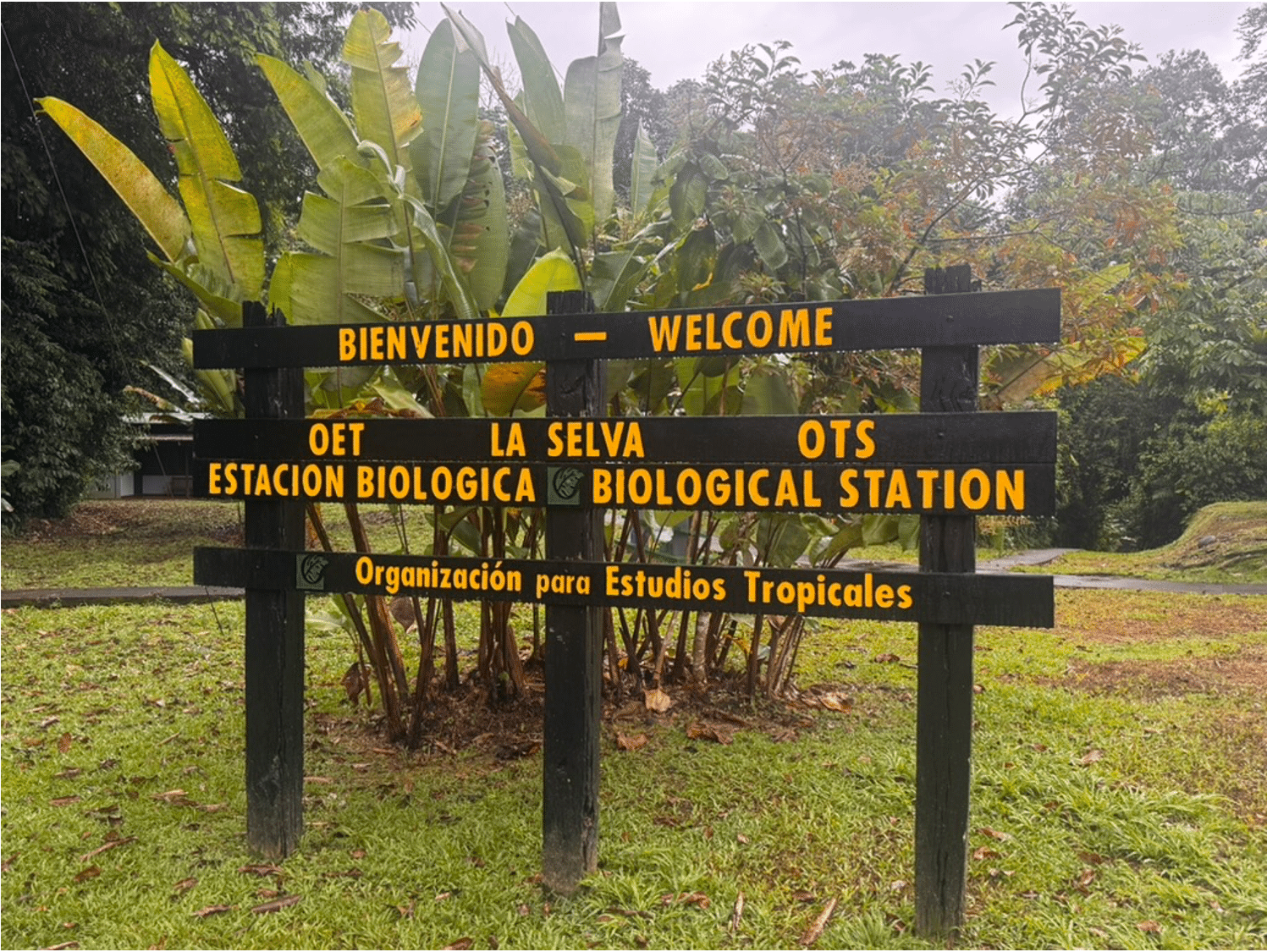
One of the world’s leading sites for tropical ecosystem research faces a clean energy setback after the Trump Administration eliminated funds through USAID. What is learned there could ultimately help spur climate action domestically.
This story was originally published on July 17, 2025, by the Sierra Nevada Ally, a nonprofit, nonpartisan news outlet focused on civics, climate, and culture. This story was produced in partnership with The Hitchcock Project for Visualizing Science and Noticiero Móvil in the Reynolds School of Journalism at the University of Nevada, Reno.
The state of Nevada is home to the two fastest warming cities in the United States, with average annual temperatures since 1970 increasing by 7.8 degrees in Reno and 5.9 degrees in Las Vegas. In order to combat these scorching temperature increases, local officials are looking to implement energy upgrades and increase shade coverage by planting trees in neighborhoods that are more vulnerable, and adopting a new Climate Action Plan (CAP).
Local efforts like these in Nevada and around the nation are aiming to offer support to Americans, but the same can’t be said for other countries facing similar and worsening circumstances.
As of July 1, the U.S. Agency for International Development (USAID) officially shut down its operations, and with it ending climate change aid, environmental protection, and humanitarian crisis support globally. People around the world are experiencing the harsh impacts of droughts, floods, and extreme heat in their communities, but are now faced with the reality of tackling these issues with insufficient funds and lack of support provided by USAID.
Climate change was a top priority for USAID, as 2020-2030 is a crucial decade in setting “a global trajectory and ensuring future generations are not subjected to the most devastating effects of climate change.” However, the 2022-2030 Climate Change Strategy, which targeted greenhouse gas emissions and adapting to the climate crisis that was well underway, now leaves other countries in search of new solutions.
That includes climate solution research projects like the La Selva Biological Station, located in the heart of the rainforest south of Puerto Viejo de Sarapiquí, Costa Rica. It became one of the first privatized areas in the country for tropical ecosystem research, and the work being done here could ultimately help climate efforts domestically.
Spanning nearly 4,000 acres of rainforest, the Organization of Tropical Studies has established La Selva as a “pioneer site in education, research, conservation, and citizen science” since 1953.
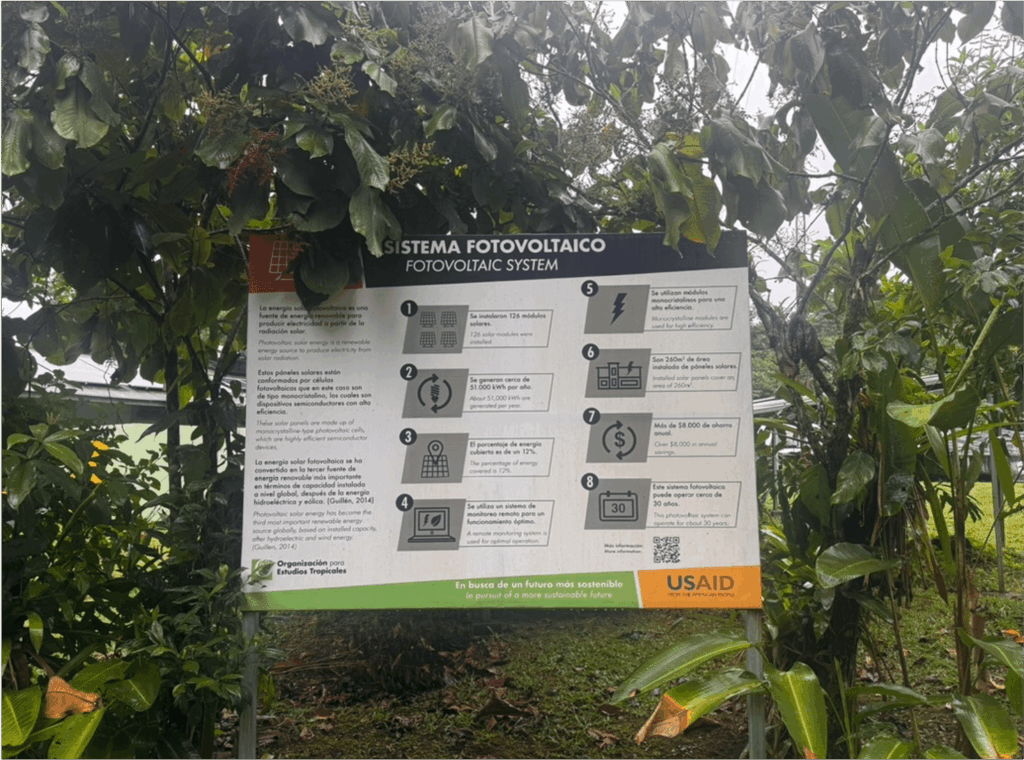
With the help of the USAID, La Selva was able to implement a solar panel project in phases to power the main areas of the station, promoting clean energy through carbon and fuel use reduction.
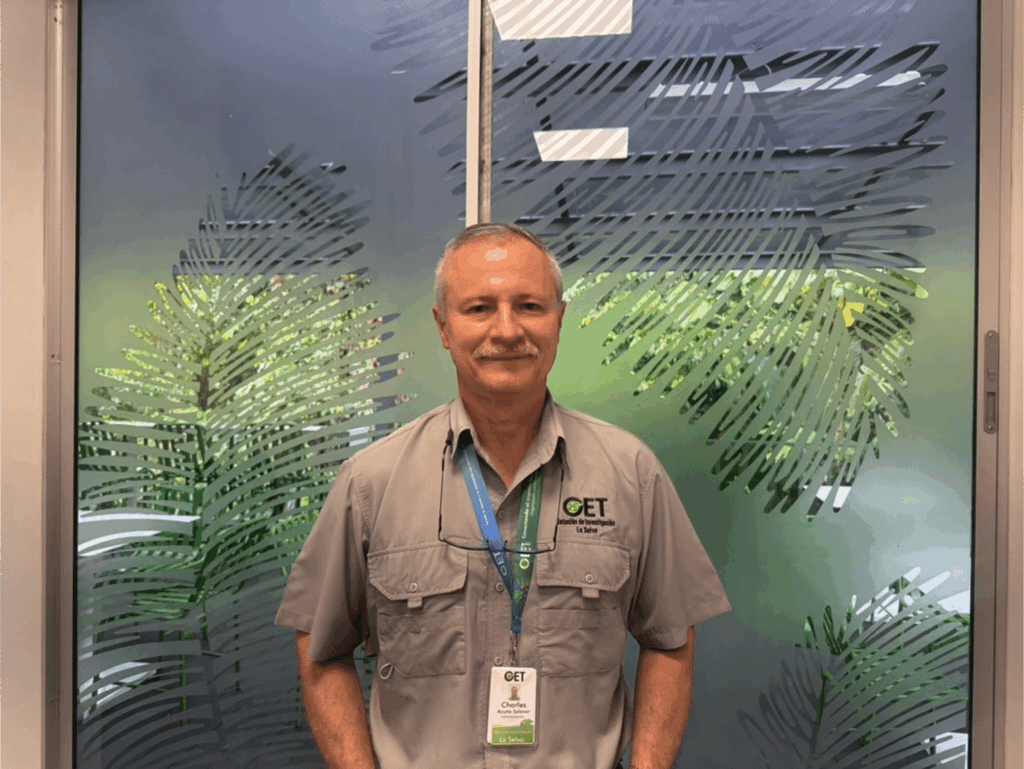
However, after USAID received budget cuts of nearly $60 billion from the Trump Administration, La Selva can no longer fund the fourth phase of installing solar panels.
“The intention of the organization is to get as close to 100% solar as possible. We are at about 75%,” [“La intención de la organización es llegar tan cerca del 100% solar como se pueda…estamos como en un 75%”] said Charles Acuña Salazar, the administration director at La Selva.
“We were going to have a fourth stage with USAID funds, but with the policies of the United States Government, the funds have been closed and so we will no longer be able to do that fourth stage,” [“Íbamos a tener una etapa número cuatro con fondos de USAID, pero con las políticas del Gobierno de Estados Unidos cerraron los fondos y entonces ya no vamos a poder hacer esa cuarta etapa”] he said.
La Selva currently has 740 solar panels, with the first phase beginning in 2017. The second and third installations followed in 2018 and 2019.
“The first stage was a little small because it was from donations from individuals. So it was like a practice to see how it worked. The second stage was with funds donated by an organization (USAID) and the third stage was an important donation made by a researcher who was here for a long term,” [“La primera etapa fue un poco pequeña. Porque fue con donaciones de personas. Entonces fue como una práctica para ver qué tal funcionaba la segunda etapa fueron fondos donados por una organización. Y la tercera etapa fue una donación importante hecha por un investigador que estuvo aquí por largo plazo”] Salazar said.
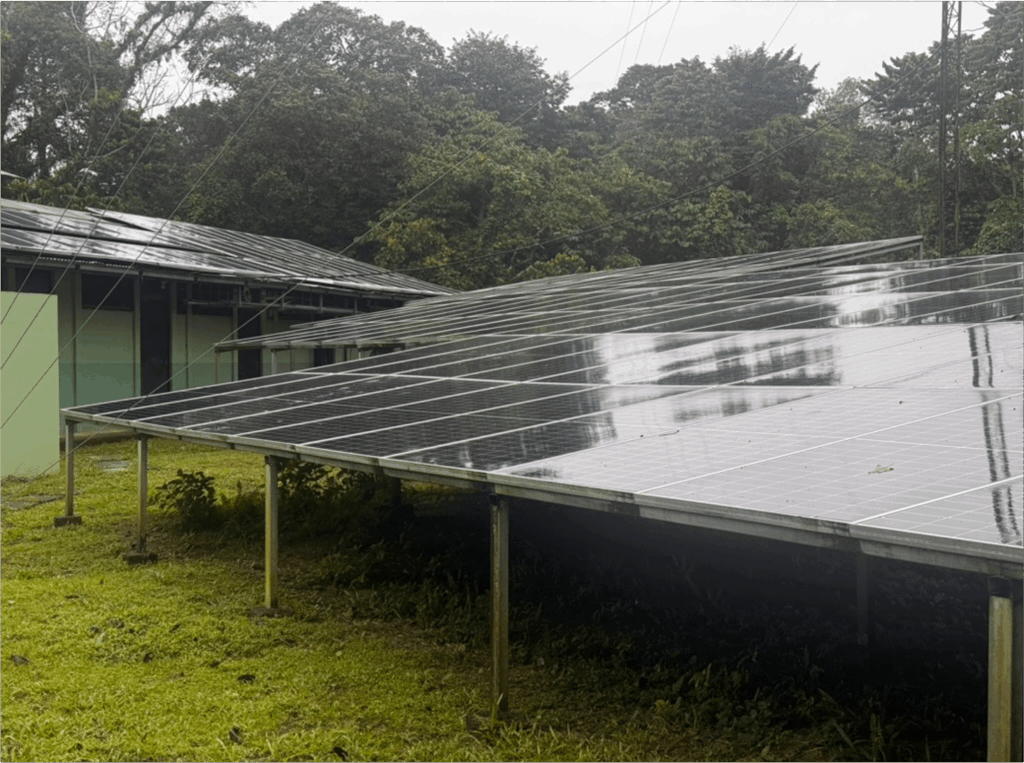
While these solar panels have been newly introduced, they have made a positive shift in the way energy is created and utilized by the facility. For example, showers used to be heated through electric energy, but now, solar water heaters are used for the station.
Beyond supplying energy for these basic kinds of amenities, USAID has provided money for upgrading air conditioning units, replacing lighting, and urinals to promote carbon reduction.
“Also with donations from USAID, we have made many changes with non-efficient equipment to more efficient equipment,” Salazar said. “We had air conditioners, for example with gases that were not very good for the environment. So we changed about 50 air conditioning units to renew and reduce our impact on the environment.” [“También con donaciones de USAID. Hemos hecho muchos cambios con equipos no eficientes a equipos más eficientes. Aires acondicionados tuvimos, por ejemplo… con gases no muy buenos para el ambiente. Entonces cambiamos como 50 unidades de aire acondicionado para renovar y disminuir nuestro impacto en el ambiente.”]
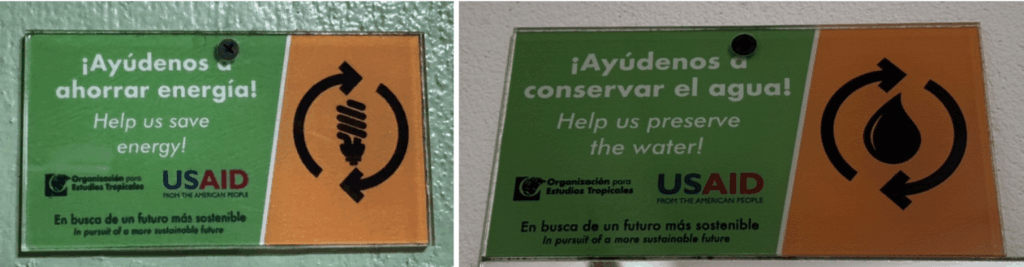
Salazar said the funds also helped them upgrade toilets and faucets that use less water, and more energy.
“Before we had incandescent lights that were very hot and used much more energy, and then when 95% of the energy was produced by solar, LED lights were installed,” [“Cambiamos toda la parte de iluminación, antes teníamos luces incandescentes que calentaban mucho y gastaban mucho más energía, y entonces logramos como un 95% a poner luz LED”] he concluded.
Without the continued financial support from USAID, La Selva is currently facing a setback with solar panel production. Still, Costa Rica isn’t the only country experiencing the effects of the Trump Administration.
According to Yale Environment 360, conservation projects are being eliminated and shut down in dozens of countries after “the Trump administration told Congress it had terminated 5,341 projects and would reduce USAID to the legally required 15 people.”
Some of the countries mentioned that have felt the impact are South Africa, Thailand, Laos, Vietnam, and Tanzania. One of the international projects to protect species like elephants and rhinos outside of the U.S. has been halted in Africa. The continent of Africa alone received $146 million in 2023, more than any other continent.
In an official memo from the administration mentioned by the Associated Press, USAID funding cuts were made to focus on American interests instead, using taxpayer dollars.
Implemented projects have been interrupted at La Selva and around the world, but these are all examples of how important programs and environmental plans heavily rely on USAID and its funding.
This now raises the question: What happens next?
For La Selva Research Station, Charles Acuña Salazar added that they expect to recover the entire solar panel investment from donations in three years. Afterwards, the energy will be considered free. However, without the help from the U.S. Agency for International Development (USAID), La Selva won’t be able to achieve their goal of reaching 100% solar energy.
This doesn’t mean they won’t ever accomplish their plans, though. It means that it may take longer than expected as the research station navigates new possible funding opportunities for the fourth and final installation of solar panels.
Daisy Gomez is a reporting intern at the Sierra Nevada Ally and a senior at the University of Nevada, Reno, pursuing a bachelor’s degree in Journalism with an emphasis in news, broadcast, and documentary. Originally from the Bay Area, she’s a proud Latina reporter passionate about bilingual, multimedia storytelling. She focuses on covering the Latino community in Northern Nevada, along with entertainment, music, and sports. Through her work, she hopes to highlight voices and stories that reflect culture, diversity, and energy.