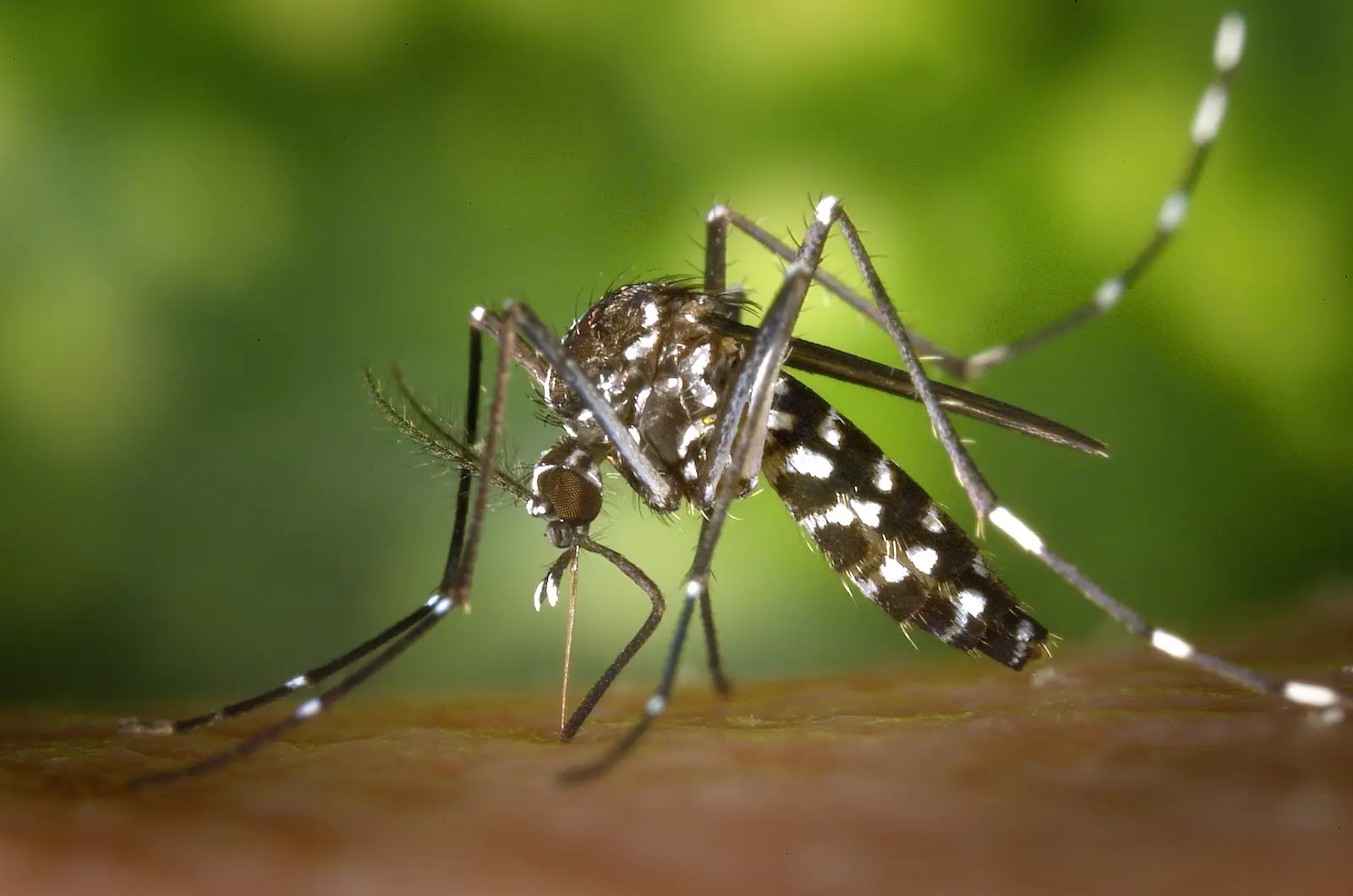
This story was written for the Science Communication Masterclass taught by Dr. John Cushman during fall semester of 2025. Above: Close-up of an Aedes mosquito feeding on a human. Note that only female mosquitoes bite. Image credit: WikiImages via Pixabay.
Rising temperatures due to climate change are affecting when and where mosquitoes can survive. These insects, which are the primary animal vector of viral disease in humans, are moving into areas once considered too cold to support them. As their habitats expand, mosquitoes are bringing diseases historically common in equatorial and tropical regions, such as dengue, West Nile, chikungunya, and Zika. Public health officials at the World Health Organization (WHO) have warned that, as the planet warms, certain vectors have begun appearing in new places and may persist longer during the year. To keep vector-borne diseases from becoming a regular part of urban life, cities need to rethink how they handle heat and water, modernize mosquito monitoring, and work with communities to reduce risk before outbreaks start.
The toll of vector-borne disease
Vector-borne illnesses, which are caused by parasites, bacteria, or viruses, account for roughly one in six incidents of infectious disease worldwide and cause over 700,000 deaths per year. The expanding range of viral vectors like mosquitoes due to climate change could put nearly a billion more people at risk of exposure to vector-borne disease by 2080. Dengue virus, the most widespread disease of mosquitoes, is already responsible for 96 million symptomatic cases annually and causes high fever and severe joint pain; in extreme cases, it leads to hemorrhagic complications with fatality rates around 1%. West Nile virus, now endemic in North America, leads to neuroinvasive disease in less than one in a hundred cases, but carries a 10% mortality rate among those who develop encephalitis.
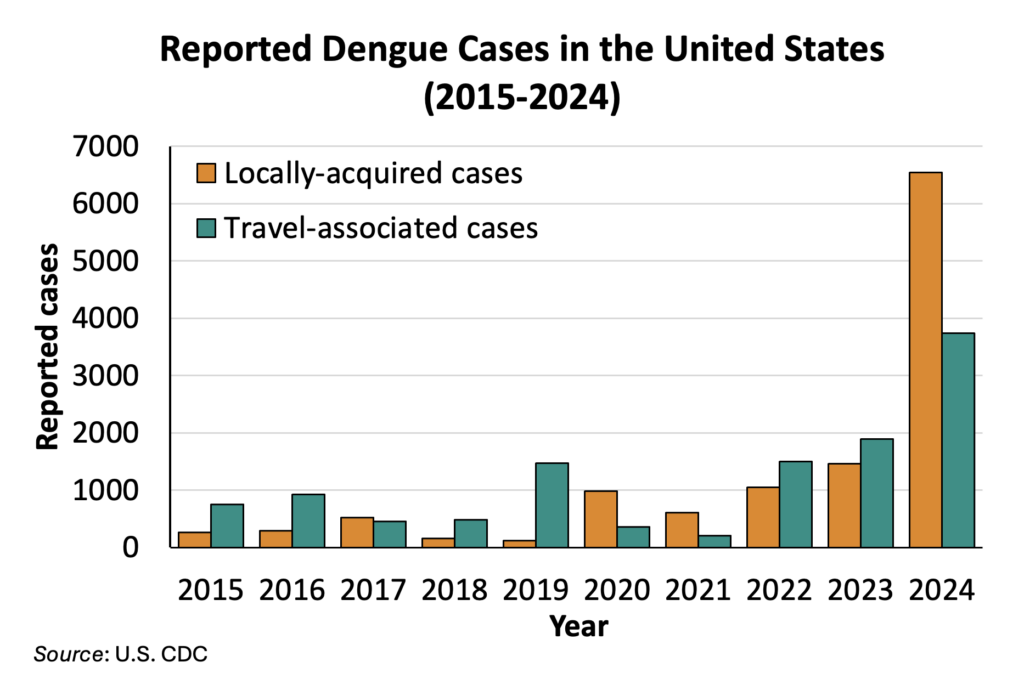
In October 2025, a woman in New York was reported to be the first U.S. case since 2019 of locally-acquired chikungunya, which produces arthritis-like pain that can persist for months. During the 2010’s, Zika virus was linked to Guillain-Barré syndrome and congenital birth defects. Collectively, these diseases impose a substantial burden on human health and economies through billions of dollars in healthcare costs and loss of productivity each year.
Critically, our ability to treat these vector-borne illnesses is severely limited.
“The problem with a lot of these vector-borne [diseases] is they’re not really treatable – we don’t really have good medications,” says Dr. Ann Marie Kimball, Professor Emerita in the Department of Epidemiology at the University of Washington. “So, prevention is really key, and awareness is key to prevention.”
A warming world and a growing threat
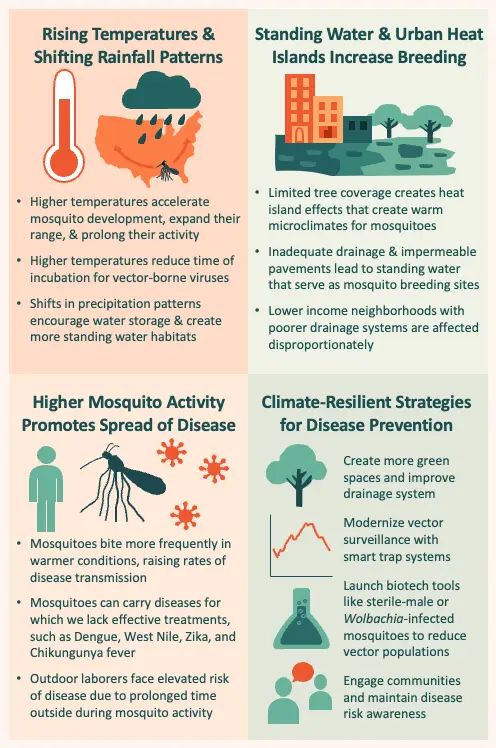
Mosquito-borne diseases are influenced by climate change in several interconnected ways. Warmer conditions accelerate mosquito development and shorten viral incubation periods, enhancing rates of disease transmission. Changes in rainfall patterns exacerbate the problem: heavy rain leaves stagnant water that can serve as mosquito breeding sites. In contrast, periods of drought can encourage water storage practices that may inadvertently create hubs for mosquito reproduction.
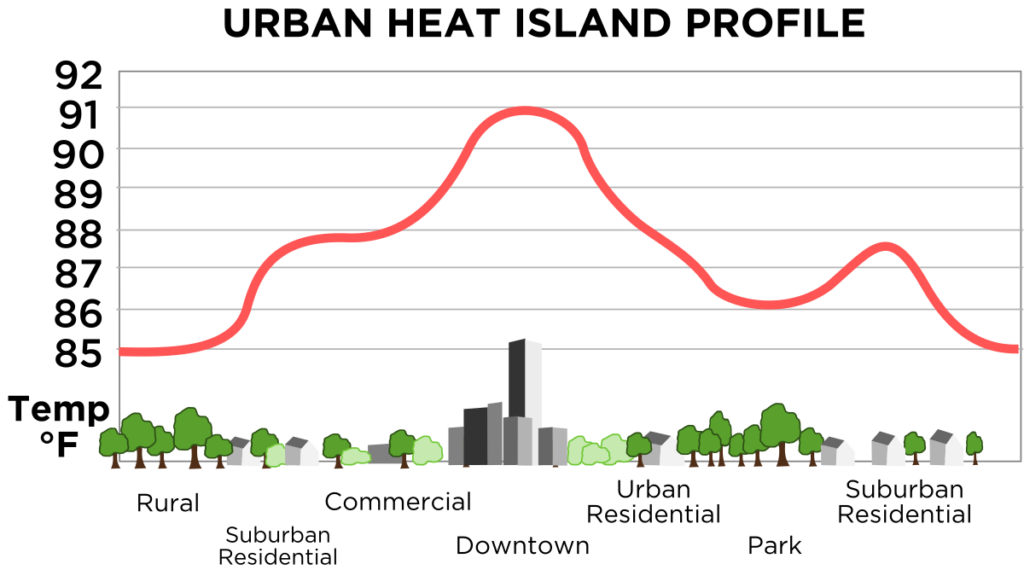
Urban settings intensify these effects. Paved surfaces and lack of tree cover trap heat and create microclimates known as urban heat islands that support mosquitoes when local temperatures decline and allow them to remain active beyond their typical seasons. The spread of Aedes mosquitoes into parts of the western United States has already been documented in locations like San Diego, and their potential range includes much of the southeastern US, underscoring the need for cities to prepare for the emerging risk of vector-borne diseases.
Infrastructure and inequality
The burdens of vector-borne illness are not likely to be distributed evenly. The greatest burden of these illnesses will be felt in lower-income communities, where limited drainage systems and inadequate cooling infrastructure contribute to unmanaged standing water and stronger heat island effects that amplify exposure risk. Furthermore, construction workers, landscapers, and other outdoor workers also face elevated risk due to prolonged time outside during peak periods of mosquito activity.
This emphasizes how the design and planning of urban environments play a decisive role in shaping vector-borne disease risks. Cities are dominated by impermeable pavements that, while great for drainage during rainstorms, can cause water to pool and generate mosquito breeding grounds and limited tree cover in urban spaces intensifies heat island effects that prolong mosquito activity.
If our cities hope to stay mosquito-free, urban planners need to begin making investments in sustainable and climate-resilient infrastructure, such as improved drainage systems, permeable pavements in low-traffic areas, and providing more tree cover with urban green spaces.
Community engagement and education
While infrastructure and city planning are critical to managing vector-borne disease risk, individuals and their communities can also play important roles. Disposing of standing water, maintaining window screens, and reporting mosquito activity to local agencies can have a marked impact on local risk when residents understand their role in prevention and trust public health efforts. Public education campaigns are important initiatives that cities can undertake to help encourage these practices.
Some cities pair these outreach efforts with mosquito surveillance. Miami-Dade County in Florida uses weekly analysis of hundreds of mosquito traps to guide advisories that encourage residents to eliminate standing water and protect themselves from bites. In Singapore, mobile app-based community alert systems have been launched to make residents aware of local mosquito activity.
“Awareness is not only for the people who might get bit, but also physicians,” says Kimball. “We, as physicians in temperate regions, don’t see these things – if a case of malaria walks through the door in Seattle, Washington, it’s going to be hard to ensure it’s recognized.”
This highlights the need to also ensure clinicians are prepared to identify diseases that they may not be accustomed to.
New tools for an old problem
Technological strategies offer powerful solutions to stay ahead of mosquito threats. Smart surveillance systems, such as sensor-based ovitraps (e.g., MosquIoT) and machine-learning platforms, can enable public health agencies to detect mosquito population changes early and respond proactively.
Biological approaches to managing vector populations are also garnering attention, such as the counterintuitive release of male mosquitoes – note that only female mosquitoes bite. These males, however, can be made to carry either a gene or type of bacteria called Wolbachia that causes their female offspring to die. These sterile males can suppress mosquito populations without relying on widespread use of pesticides. Wolbachia-infected mosquitoes have already been released in Hawaii and South America in attempts to reduce mosquito populations. Cities should consider implementing these promising strategies to preempt vector-borne illnesses.
Policy preparedness and the path ahead
Public health experts agree that vector-borne illness is not just a health issue, but also a climate change and governance issue. The WHO has identified action on climate change, improving infrastructure, and sustainable urban development as key approaches to improving vector control. Achieving global goals to reduce deaths from vector-borne diseases will require sincere efforts from local leaders and coordination across public health, environment, housing, and city planning agencies – as well as sustained investment that prioritizes prevention over crisis response.
Worsening vector-borne disease is not a distant threat; it is an unfolding reality. Fortunately, our knowledge about the factors fueling the expansion of mosquitoes, including rising temperatures and rapid urbanization, points us in the direction of solutions for curbing the problem. Cities that invest now in climate-resilient infrastructure, greener spaces, modern mosquito surveillance and management, and community engagement will be best-prepared to handle both present and future vector-borne diseases. Whether mosquitoes and the diseases they carry become seasonal challenges or year-round parts of urban life will depend largely upon the choices made today by city planners and policymakers.
Cody Cris is a molecular microbiologist and PhD candidate in Molecular Biosciences at the University of Nevada, Reno. His research includes antiviral discovery and characterizing the mechanisms by which viruses manipulate cells.