
A Q&A with sleep researcher Jessica Olsen
Sleep– we all need it. But do any of us actually get enough of it? What are the implications if we don’t? As a student myself, I used to wear my lack of sleep as a badge of pride. “Look at me,” it says, “working so hard I’m only sleeping a couple hours a night.” Turns out, a lack of sleep has devastating implications on our health and well-being.
According to a recent Healthy Minds survey, college students are experiencing all-time high rates of anxiety and depression. During the 2021-2022 academic year, of the 96,000 students surveyed nationwide, 44% of students reported symptoms of depression, and 37% said they experienced anxiety. These are the highest numbers recorded in the survey’s 15-year history.
Clearly, there’s a mental health epidemic at hand. There are many solutions: SSRIs and other antidepressant medications, various forms of therapy, and, of course, the generic, over-the-counter advice, “make sure you’re eating, sleeping, and exercising well.”
However, in times of stress, sleep is usually the first to go. I’m guilty of it myself. I’m sure you are as well. My perspective on all of this radically shifted, however, after I met Jess.
Jessica Olsen is a clinical psychology PhD student at Oregon State University. Her research focuses on sleep and its health impacts, especially in underserved communities. Her current research is focused on the relationships between sleep and eating disorders in athletes, with later work focused on sleep and chronic pain.
However, our story starts far before this. Jess and I met early on in undergrad, introduced by my now-husband. We’ve spent many hours in the mountains propped up between rock climbing pads, discussing everything from behavioural plasticity in songbirds to how to most effectively care for the most marginalized in our communities. I was one of the first to volunteer for a study she worked on in undergrad examining sleep and mental health. When I was tasked with interviewing a scientist on health and wellness, Jess was the first to come to mind.
-Ai Ana Richmond
Richmond: So, why study sleep?
Olsen: I’m really interested in examining behavior-based interventions, which is just basically improving someone’s sleep and shifting their sleep time back to normal to see if that reduces depression. I think that this type of intervention-based research is really cool because it has the ability to actually direct change without medication. While I 100% support medication, accessible and simple interventions for people are really important.
Richmond: You mentioned that you’ve focused on adolescence in the past. Is there something specific about this age period that makes sleep especially crucial or particularly susceptible to mental health problems?
Olsen: Yeah, there are a lot of social factors. There are early school times, a lot of sports and extracurriculars, as well as a lot of social events. All of these contribute to people going to bed late and getting up early, which can really disrupt sleep periods. There’s all these social structures that build up that lead to having insufficient sleep. Very few adolescents have sufficient sleep, like less than 30% are actually getting the sleep they should be getting, and then having insufficient sleep can be associated with depression symptoms. But why is it particularly important in the adolescence time period? Adolescents with more severe or prolonged depression in the future may have increased likelihood of suicide attempts in comparison to individuals who develop depression later in life. It’s very important to look at the sleep and depression relationship in adolescents and approach it from a mortality intervention standpoint.
Richmond: So this work is obviously meaningful in a social impact kind of way. How do you see this play out in the bigger picture?
Olsen: I think in this society, we don’t really do preventative health care well. We have a lot of systemic barriers that reduce people’s likelihood of even being able to go to the hospital […] A lot of our healthcare is treated like once you have a problem, then you go seek care. I think that there’s a really big need for preventative healthcare– what are steps we can do to prevent these issues from actually occurring? An additional layer is how do you make that accessible to people in various communities who don’t have access, who have mistrust, who live in rural communities, immigrants (especially now) who are too scared to seek care, people who can’t afford it… so many reasons why people don’t go in the first place. But I’m really interested in finding that bridge of preventing things before they can occur. Obviously, health concerns can and will still occur, but trying to find accessible interventions for people is really important.
Richmond: Do you think the general public has a good understanding of the importance of sleep, or do you think people see it as the kind of thing they can brush off?
Olsen: I’ve started reading this book called Why We Sleep, and even I didn’t know how important sleep is until I started reading it. There are so many short-term mental health effects, but there’s also long-term physical health effects of not sleeping. I don’t think that’s very well understood, but it’s associated with so many health factors that I think the general population just doesn’t know. There’s also this really weird culture with social media of this mentality of “You don’t need sleep! You need to work hard!” and this capitalist-embedded ideology of that to succeed, you need to do whatever it takes. But really, to succeed is also to think of your mental health. It’s hard to succeed if you’re not taking care of your mental and physical well-being. Like yeah, maybe there’ll be a financial gain if you don’t sleep. But also, your emotional regulation is going to be off the walls, and long-term health effects aren’t going to be great. Not sleeping does have a toll on your body that just isn’t considered in this culture. It’s very interesting– there’s this “go go go, push push push”–
Richmond: The “grindset–”
Olsen: Exactly! The “grindset,” without considering the negative health impacts. But also, sleep is really good for memory consolidation, emotional regulation, literally how you need to learn the things you need to learn – there’s research that looks at how you can take a twenty minute nap and how that is probably going to be more beneficial for you to remember material that you’re cramming and studying than just staying up all night and studying. Sleeping will literally help you remember the information you’re learning, but that’s not valued in this culture – it’s just like “Nope, let’s just cram, grind, and eff ourselves, I guess. It doesn’t matter.” We really don’t consider all the things this does to our bodies.
Richmond: Do you think there’s a lot of dispute about this among sleep scientists, or do you think most scientists agree with the importance of sleep and its impacts on mental health?
Olsen: I think most people would agree. I don’t think it’s as much of a divide between the researchers, I think there’s a divide between the way our society functions and pushes people to be their best all the time and sleep is something that’s forgotten about.
Richmond: That’s really interesting, but also really sad and messed up.
Olsen: Yeah, I mean, even researchers are guilty of this. My old PI (principal investigator) would always say sleep researchers get the worst sleep, and I think that’s very true. A lot of sleep researchers will do sleep deprivation studies or stay up overnight doing sleep research, but they’re depriving themselves of sleep.
Richmond: If we’re thinking about college students who are notoriously bad at sleeping, what are some clear, actionable steps you’d recommend?
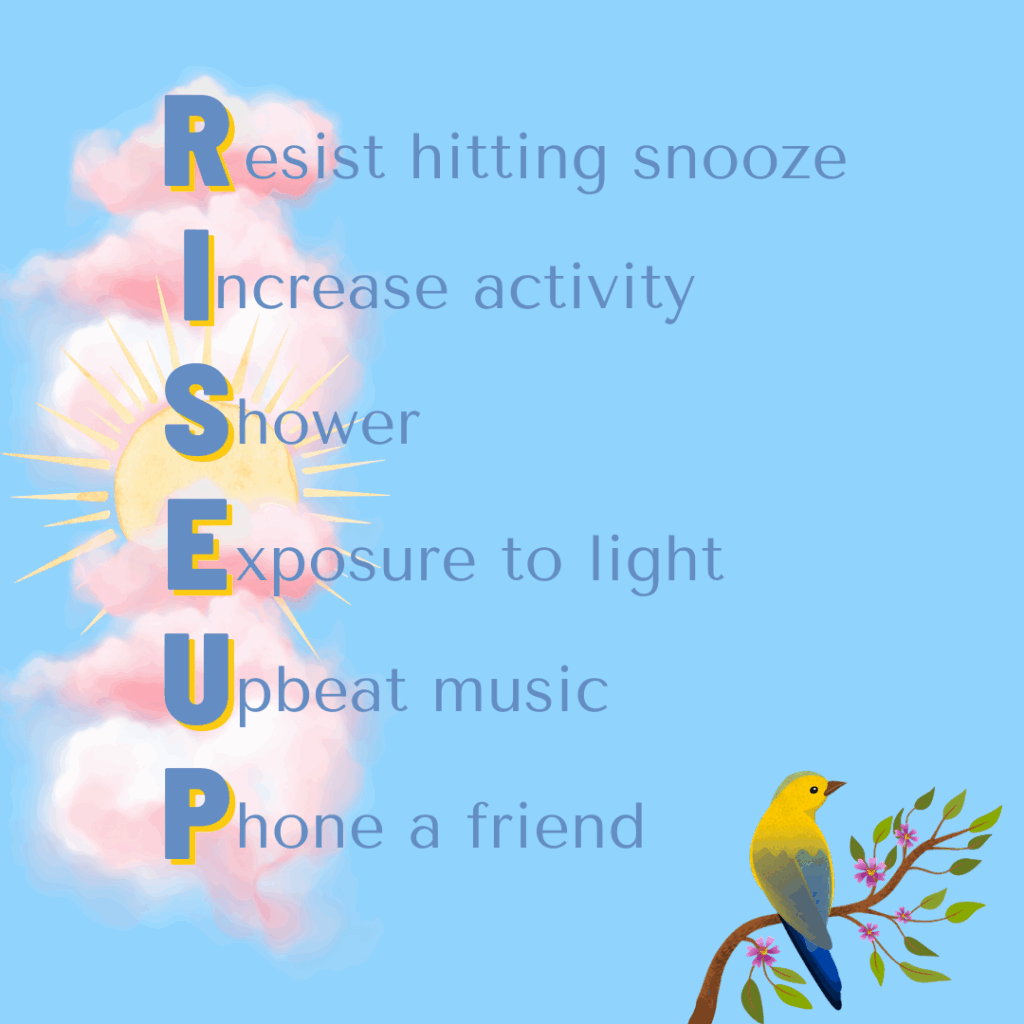
Olsen: I think one big thing is having a wind-down routine where you try and relax, just find ways that make you tired. Taking a hot shower reduces your body temperature, which naturally will help you fall asleep better. Having a consistent bedtime where you fall asleep or attempt to fall asleep is important. Having inconsistent routines is not great– try to have a structured routine. Also, in the morning, expose yourself to bright light. I’ve got a sunrise alarm clock. It helps you be more alert earlier in the day. As you go through the day, you have this sleep pressure– if you’re alert earlier in the day, you’ll be more tired by your set bedtime routine. […] There’s actually an acronym for this, RISE UP.
Richmond: There’s no way I could do all those things. But it’s just the discipline of building the routine and once you get into the routine it’s easier to maintain.
Olsen: Yeah, and I think it’s also accepting that when you get out of the routine, don’t get super upset at yourself for getting out of it. You can gradually shift your sleep back, just by thirty minutes or an hour a day. It doesn’t have to be super drastic. Being kind to yourself and knowing life is crazy is important, too.
Richmond: As a fellow early-career researcher, what’s been something you’ve been surprised to learn about or that’s given you pause?
Olsen: I was somewhat surprised to learn that sleep quality is really just not a great measurement. There are so many studies that solely look at sleep quality, but sleep is so multidimensional. I was like, oh… If you think about it, how would you define sleep quality?
Richmond: Me? Well… it’s one of those things I think I have, like, an intuitive understanding of that’s hard to put into words. There are definitely nights where I don’t sleep well or I’m sleeping really lightly and kind of tossing and turning. And then there are nights where I just conk out and just sleep deeply for hours. But I also don’t know enough to quantify or talk about how you’d measure that.
Olsen: So, you could ask probably ten people that question, and they’d all say something different about what they think sleep quality is. There are other measurements that are really good. Sleep duration – how long did they actually sleep? Sleep midpoint – I don’t know why scientists use midpoint yet, I’ll learn that – but people use midpoint as the middle time of sleep. A lot of these measurements use actiwatches, which are relatively accurate for objective data. However, a subjective measurement is what someone says or perceives. These objective metrics aren’t always going to be accurate if someone is tired when they’re going to bed, wake up, and are still tired even though they slept eight hours. So sleep quality is just a really interesting measurement, and there may be better options to capture sleep. But in my head, it’s really important to get the perception of people. I really like to do qualitative work to see what people really think. That’s really important. I think objective data is still interesting, but also you need to consider all the other factors connected to that.
Richmond: There’s so much importance to quantitative studies, but observations are crucial! It isn’t valued as much because it’s so hard to quantify, but it’s equally important. We’re just so quick to discard it.
Olsen: Yeah, I think it’s also important in terms of intersectionality. People have multiple identities. For example, sexual minorities compared to different ethnic or racial backgrounds. You might have faced discrimination for a certain reason, but that can be attributed to different things. So if you ask “Have you experienced discrimination?” but your audience holds multiple backgrounds, it’s hard to know what kind of discrimination they’ve actually experienced without differentiating between them. Another thing too, my lab is doing a study looking at international students’ sleep and looking at the cultural beliefs around sleep because that’s not a huge thing that the field knows about. What are different cultural beliefs around sleep? So that type of research definitely has its place, especially for this exploratory research. I definitely am a bit biased and will probably more often use quantitative methods, but qualitative stuff will always have a place in my heart.
If you are interested in learning more about the importance of sleep, check out Why We Sleep, which Jessica Olsen recommended in this interview. If you’d like to learn more about Jess’ research, contact a.a.h.richmond@gmail.com to be put in contact with her.
Ai Ana Richmond is a PhD student in the Ecology, Evolution, and Conservation Biology programme at UNR, where she spends most of her time chasing chickadees around the mountains. When she is not in the mountains, she can be found baking, talking to her chickens, doing art, or curled up with a good book and some tea! She wrote this Q&A for RJS’s Science and New Media course during spring of 2025.