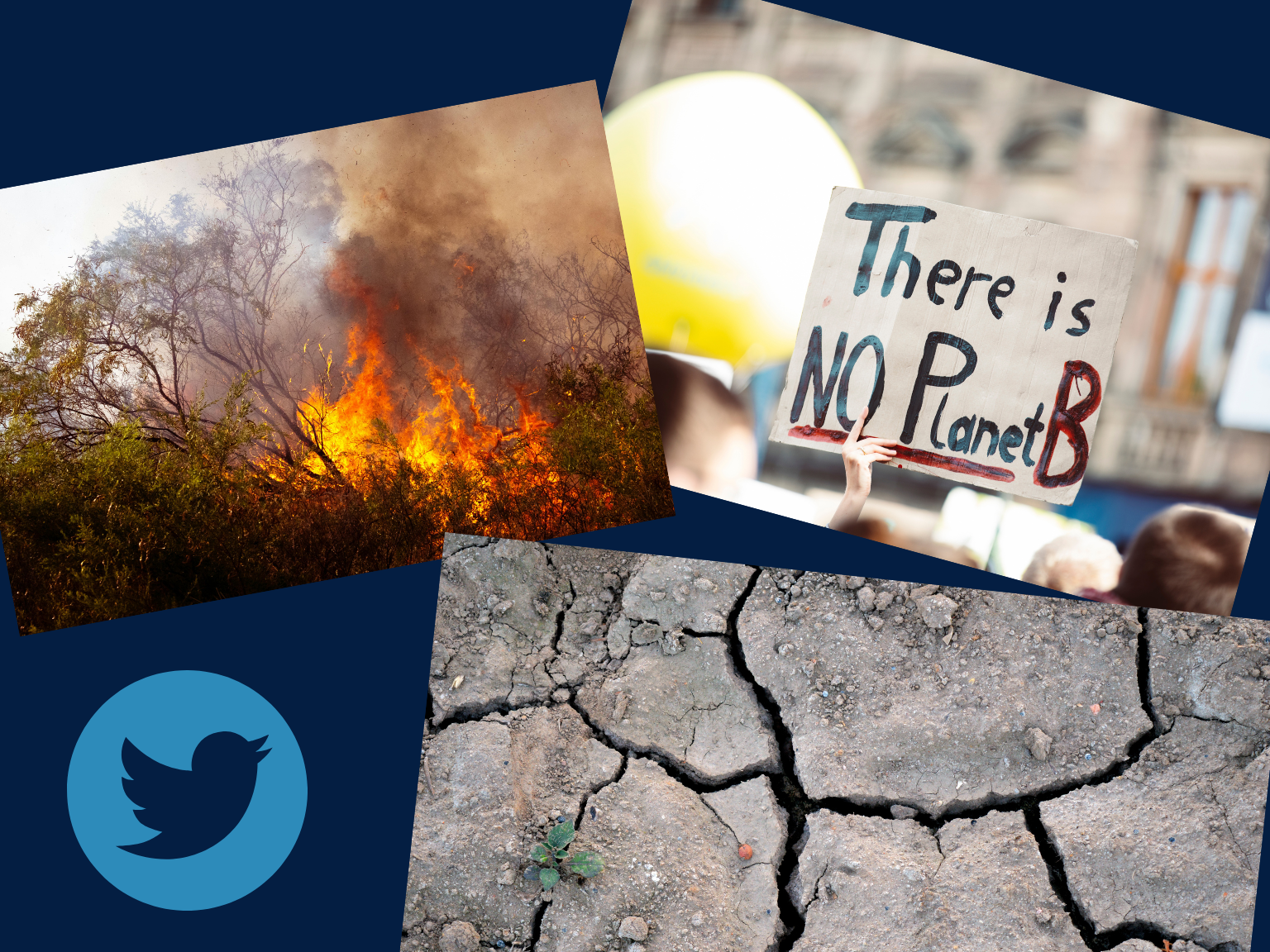
Climate change is often discussed in numbers and predictions, but numbers alone rarely move us to act. What can? In climate change communication, images are an extremely important tool for engagement – a way to help capture the human face of crisis. Imagine a photograph of a family bracing against a storm, or a community displaced by floods, carrying what little they have left on their backs. These images don’t just document disaster; they evoke empathy, which can turn passive observers into advocates for change.
But not all visuals resonate equally. What makes one image a cause for action, while another fades into the noise? A 2022 study in Climate Policy led by Bienvenido León from the University of Navarra, Spain, analyzed images from Twitter (currently known as “X”) to reveal principles for selecting or creating visuals that encourage engagement on social media. The results remind us that climate change isn’t just about melting ice caps or rising temperatures—it’s about people. Real people, with real stories, living through real consequences. In this article, we’ll explore León’s research into why certain images move us, how they can shape our understanding of climate change, and what it means for the fight to save our planet.
What Makes a Climate Change Image Go Viral?
León’s study analyzed 380 images from Twitter’s “top tweets” about climate change over a year. The goal? To figure out which kind of visuals were used most frequently to represent climate change, and which sparked the most interaction—likes, retweets, and comments.
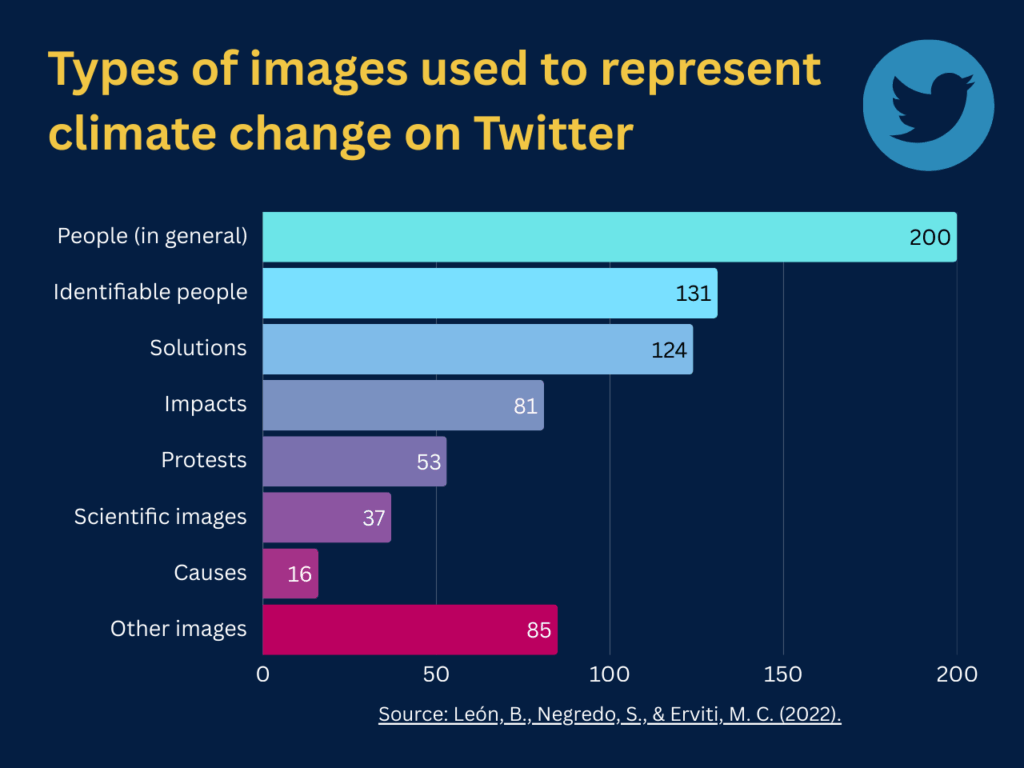
While traditional media often relies on polar bears and melting ice caps to represent climate change, the study results showed that Twitter users most frequently used images of people (52.36%), including identifiable people such as famous politicians, business leaders, actors or writers (31.26%). Images depicting climate solutions and climate change impacts were slightly less common. Images showing causes of climate change, like greenhouse gas emissions, were the least frequently observed (3.82%).
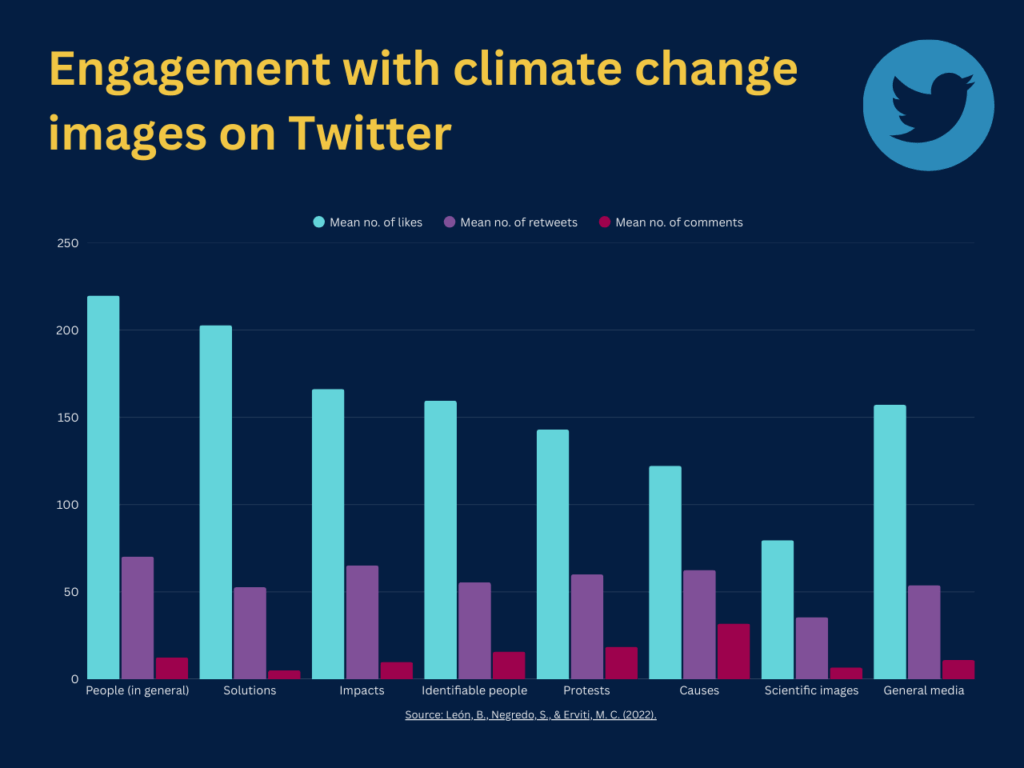
When it came to audience interaction, images of everyday people—especially those experiencing the impacts of climate change firsthand— were also found to be the most engaging, receiving the highest number of likes (219) and retweets (70) out of the 380 images analyzed. These seemed to resonate more than photos of recognizable people like politicians or celebrities (159 likes, 59 retweets), or images of non-real (staged) people. It could be that a photo of a farmer struggling with drought or a family fleeing a wildfire tug at our heartstrings because it feels authentic. It’s not just a news story; it’s a human story.
But it’s not just about who’s in the picture, the researchers found – it’s about the story it tells. The most engaging images on Twitter in this study were those that captured a narrative, like a horse dying from heat exhaustion in Australia, accompanied by a tweet that read, “This is what climate change feels like. It kills.” These visuals don’t just inform; they evoke emotion and make the abstract tangible.
Other compelling image types included those depicting real people (not staged for the camera), a local connection, or people who were directly affected by climate change. Below are selected examples that were shared in the study.
Gallery of example images



What Does This Mean for Communicators?
According to the study authors, the secret sauce behind these visuals lies in two key principles: meaningfulness and personification. Images that feel familiar or culturally relevant—like a local flood or a community protest—make climate change feel immediate and real. They tap into our innate desire to connect with what’s close to us. And putting a human face on climate change helps us empathize. When we see real people—not statistics or graphs—we’re more likely to care.
The research team summarized their findings into four practical principals for visually engaging images: 1. show real people (not staged for the camera); 2. tell a story, 3. include a local connection, and 4. show people who are directly affected by climate change. Social media campaigns that leverage these principles can do more than just raise awareness—they can inspire action. Whether it’s planting trees, supporting climate policies, or joining a protest, the right image can help move people from apathy toward engagement.
These principles are rooted in psychology. Our brains are wired to respond to stories and faces, not abstract data. And in the age of information overload, visuals that tell a compelling story cut through the noise.
Read the study
León, B., Negredo, S., & Erviti, M. C. (2022). Social Engagement with climate change: principles for effective visual representation on social media. Climate Policy, 22(8), 976–992. https://doi.org/10.1080/14693062.2022.2077292
Abdulmalik Adetola is a master’s student in the Media Innovation and Journalism program at UNR and a graduate assistant for the Hitchcock Project. He is a passionate advocate for health literacy and digital communication, dedicated to promoting accurate and accessible health information in the modern age.