
Venture into Lassen Volcanic National Park with Nevada scientists Philipp Ruprecht and Jakob Scheel
This story was originally published on Nevada Today, and is available in Spanish and English. To learn more about this story, please visit The Rock Whisperers project page on the Hitchcock Project website.
Golden dawn light filters through the pine needles overhead on a chilly September morning at Manzanita Lake Campground in Lassen Volcanic National Park. At a picnic table, Philipp Ruprecht and his colleague Mike Gardner boiled water for an essential morning elixir – coffee.
From an outside perspective, this may appear like any other weekend camping trip with a group of outdoorsy folks enjoying the final days of summer, but it is more than that.
This weekend, Ruprecht, a volcanologist and associate professor from the University of Nevada, Reno, Gardner, an engineer and assistant professor from UC Davis, and graduate student Jakob Scheel are venturing into the field at Lassen to hunt for a specific kind of rock that will help give insight into the events leading up to volcanic eruptions.
“We’re studying here these rocks that are about 1,000 years old,” Ruprecht said. “They have parts in them that we call mafic enclaves. They are the magma that potentially triggered a volcanic eruption.”

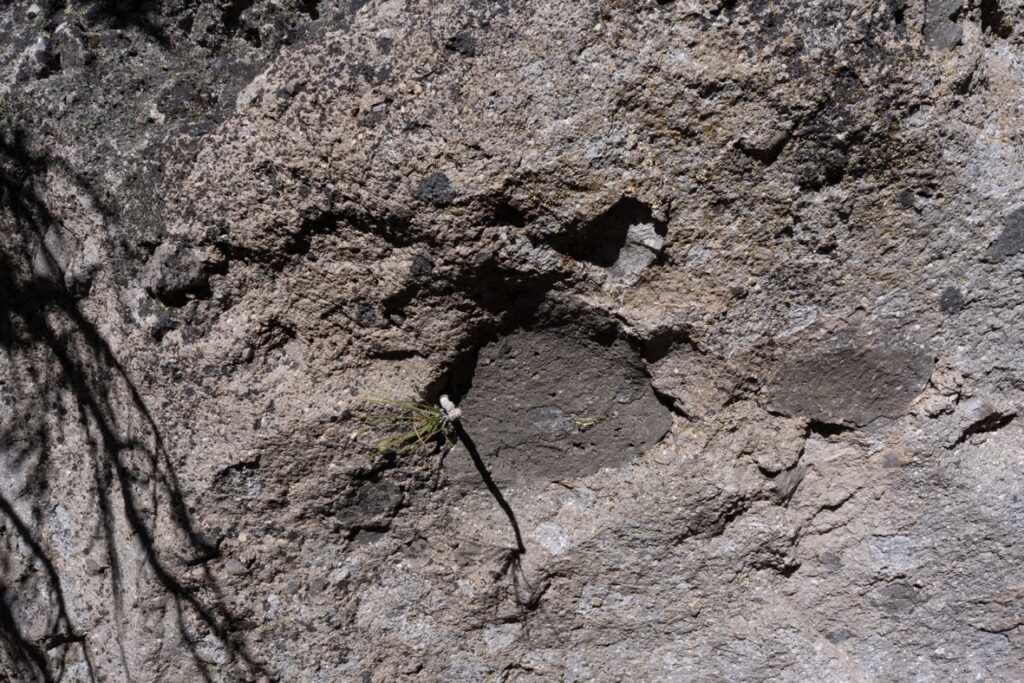
Mafic enclaves are dark, dense blobs of magnesium and iron-rich rock found trapped inside lighter-colored volcanic boulders. They are formed when hot magma from deeper in the Earth’s crust intrudes into an existing cooler magma chamber, solidifying and suspending in the host magma. For volcanologists, they’re time capsules that hold a crystal record of what happened within the Earth thousands of years ago.
Today, the team plans to collect samples of these enclaves and their crystals, which they will later take back to their lab at the University to analyze.
“We can’t drill into a volcano and so as a volcanologist, we need to kind of get there by, for example, looking at crystals that basically were there at the site of where all action happened and then we can read in that record of these crystals,” Ruprecht said.
Unfurling a colorful map, Ruprecht pointed to some orange splotches in the center. Here, about 1,000 years ago, a string of six volcanic eruptions took place to create a formation known as the Chaos Crags. This is today’s destination.
“What we want to understand is by having six different eruptions, we can basically take different snapshots in time on how this magmatic system changed in that time period,” Ruprecht said.
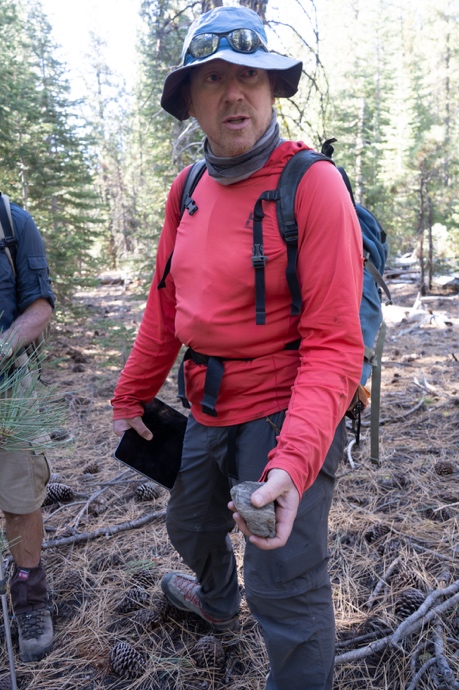

Packs were loaded with sledgehammers, water bottles filled, sunscreen slathered, and the group of researchers set off into the wilderness. Ruprecht, clad in a faded red sun shirt, led the way up a trail at the edge of the campground and off into the forest. The terrain, first moderately flat, grew steeper as the group hiked on. Soon the forest gave way to a moonscape terrain, the pine needles and manzanita bushes replaced by crunchy ash-colored cinder.
“Us volcanologists get excited the less biology there is around,” Ruprecht said.
Up and up the party hiked, traversing across ecoclines and topo lines to the base of a line of cliffs, where large boulders rested, each cracked in a radial pattern. These cracks occurred as the volcanic boulders cooled, from the outside in, Ruprecht explained.
For Ruprecht, this landscape is a map of the past, if one only knows where to look. Rock formations and crystalline structures act as landmarks in time, all fitting together as pieces to a puzzle of the formation of the Earth.
The crew climbed higher, up loose scree and over shifting rock. After cresting a saddle between two peaks, a formation known as “Dome A” came into sight, a wall of boulders and teetering rocks. The party picked their way through the boulder field in a single-file line, carefully navigating the loose terrain. They crossed a narrow pass and went down the other side, into a boulder field that was a promising place for enclaves, and perhaps more importantly, had shade.

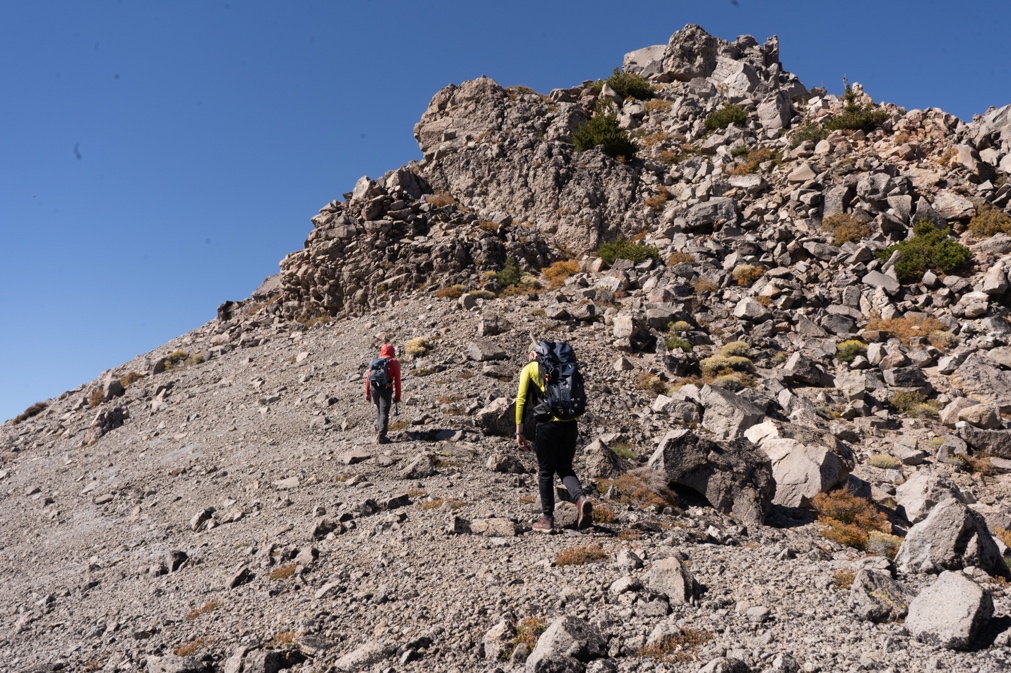
Immediately, Ruprecht, Scheel, and Gardner dropped their packs and began scouring the landscape for the rocks in question — mafic enclaves. They appeared as dark blobs of rock within lighter grey rock faces, like easter eggs turned to stone.
The trio of scientists was transported into a parallel world of geology with a language of their own: “We don’t want amphibole. We want the plagioclase… What about this one?… Yeah, look at that plag… We should get some of the host material on this one too…”
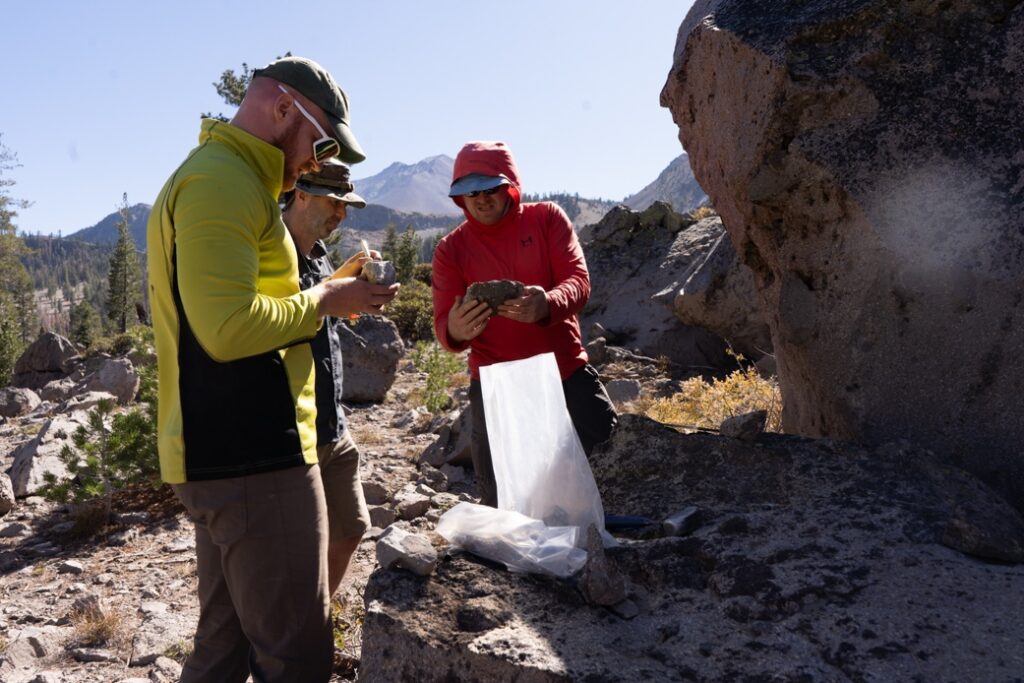
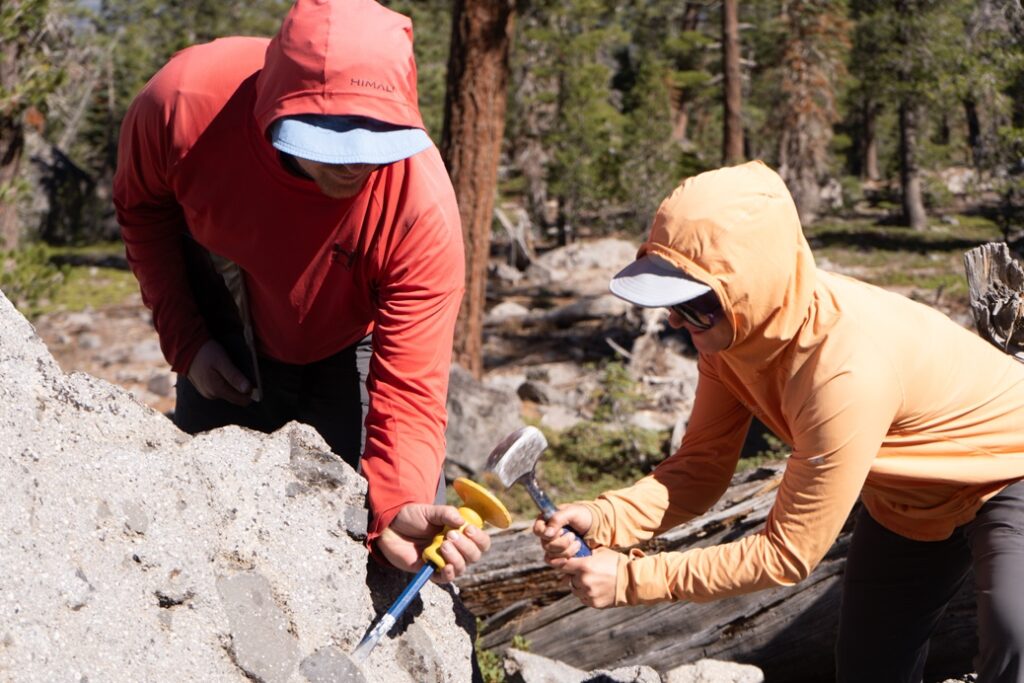
Ruprecht found his target of choice on the face of a massive block of stone. He snapped a photo with his iPad and took a GPS location of the sample site.
Expertly, Ruprecht chipped away a sample of rock, then pulled a hand lens on a necklace of string out from beneath his shirt. Squinting, he held the lens up to his eye and rotated the rock this way and that as the sun glinted off the crystal faces.
“Yes,” Ruprecht said. “Probably pyroxene. See those tiny black blocky crystal right next to plagioclase?”
These crystals, though tiny, may just be what is needed to unravel the biggest questions about the planet’s past – and future. By reading the crystal record, Ruprecht and Scheel are attempting to learn what conditions inside the magma chamber were like leading up to the volcanic eruptions.
After this weekend’s expedition, the scientists will bring these samples back to the University’s Microbeam Lab, where they will analyze their chemical makeup using a specialized piece of equipment called an electron microprobe. By analyzing trace amounts of elements found within these crystals, the scientists can better understand the temperatures and conditions within the magma chamber.
Learn how mafic enclaves form and the tools and techniques scientists use to study them. Credit: Kat Fulwider.
Scheel retrieved another sample with a satisfying smack-thud from his sledgehammer, then marked it with a sample number. The next forty minutes were a cacophony of hammering and discussion, as a routine of photography, hammering, examining, and logging samples ensued.
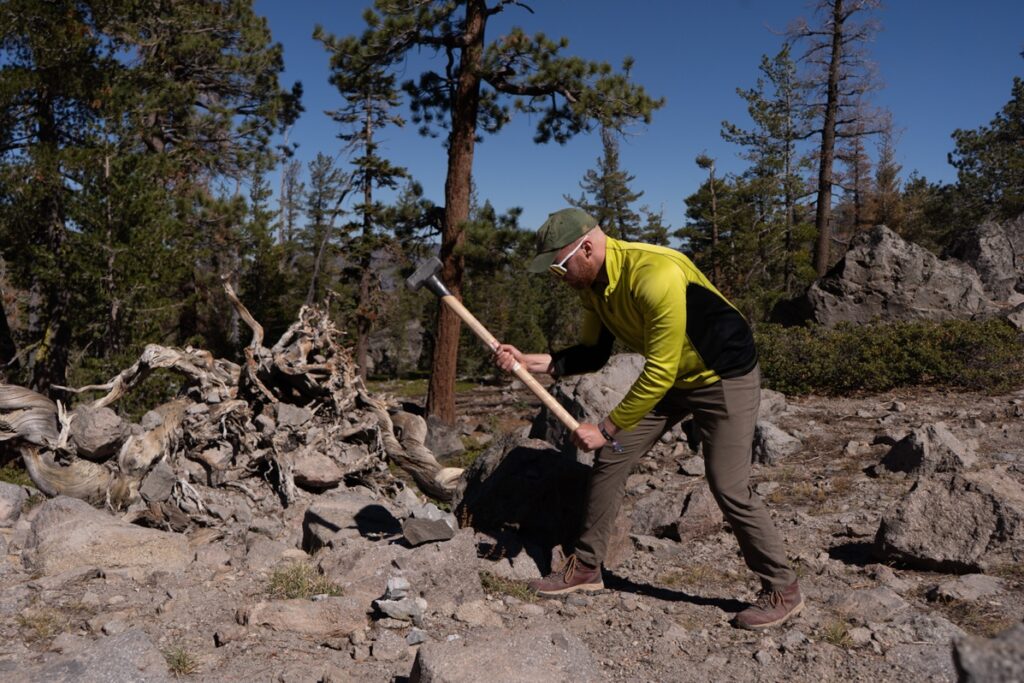
After a quick lunch break in the shade, everyone shouldered their packs to move on to the next sample site, “Dome B.” The party funneled back through the spire pass and skirted the semi-circle crater of a hopefully extinct vent, beyond which Lassen Peak rose, dominating the skyline.
The slumbering giant lay in a tepid peace. Lassen Peak, the southernmost peak in the Cascade range, last erupted explosively in 1915, jettisoning volcanic ash into the sky and sending it up to 200 miles eastward. This and other previous eruptions left lasting marks on the landscape, reflected in namesakes such as the “devastated area” and “the jumbles.”
Although volcanoes can be very destructive and have an inherent danger tied to them, Ruprecht sees them in a different light.
“They are places where life is created and the reason why sometimes life is destroyed, because volcanoes are the places where the land is resurfaced,” Ruprecht said. “New nutrients are being brought to the Earth’s surface, and you can basically have new life coming from that.”
At Dome B, the group collected additional samples. In the late afternoon, the group divided the rock samples into their packs and began the slow descent through the boulder and scree fields back toward camp.
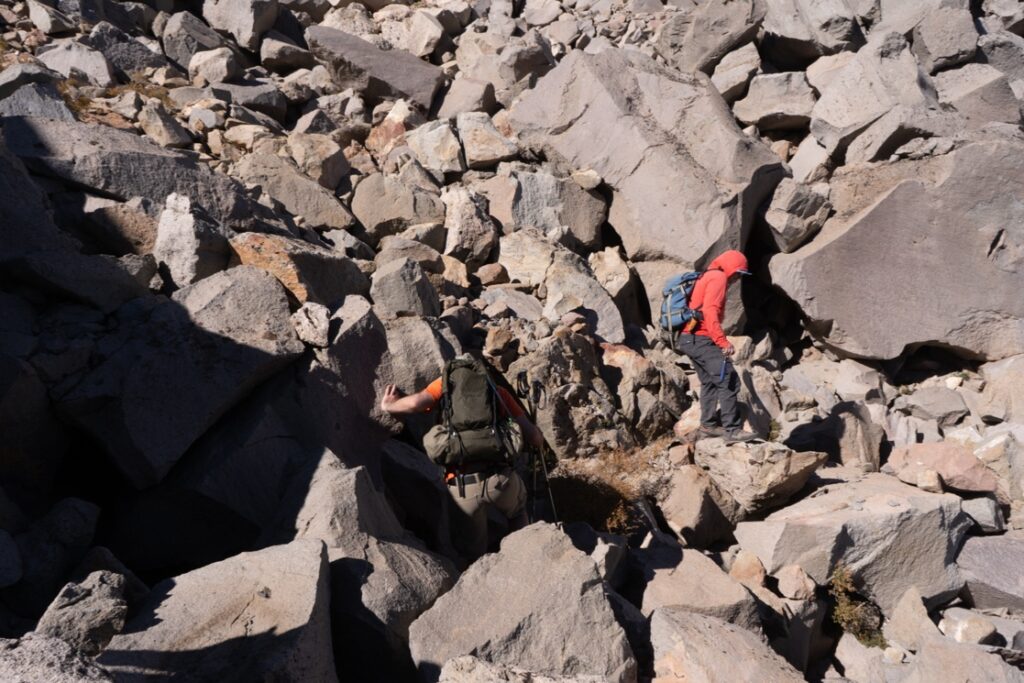
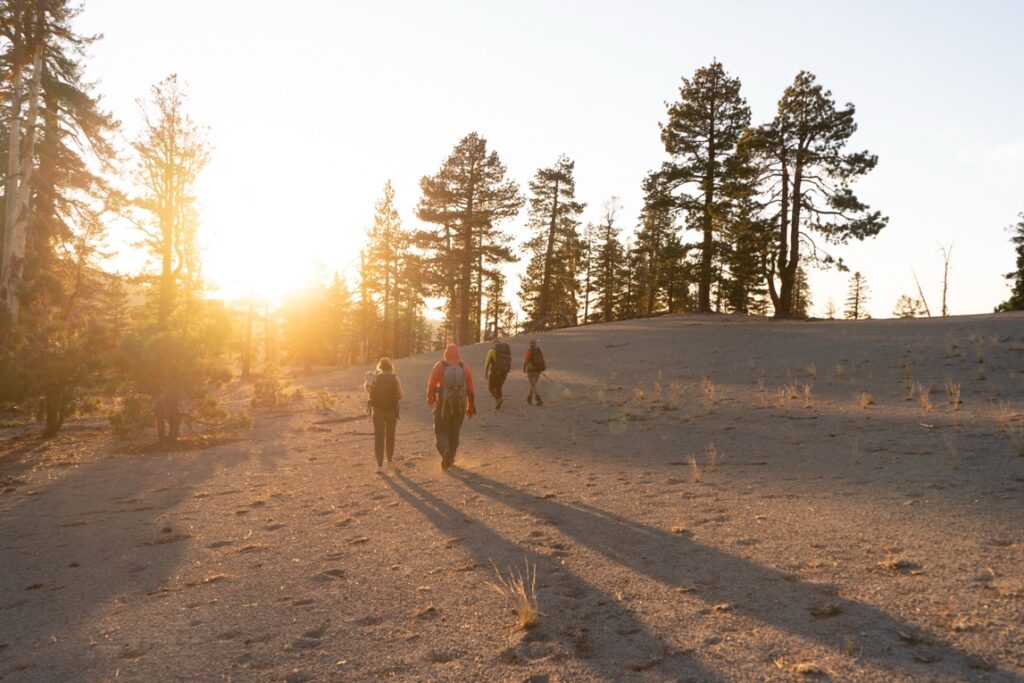
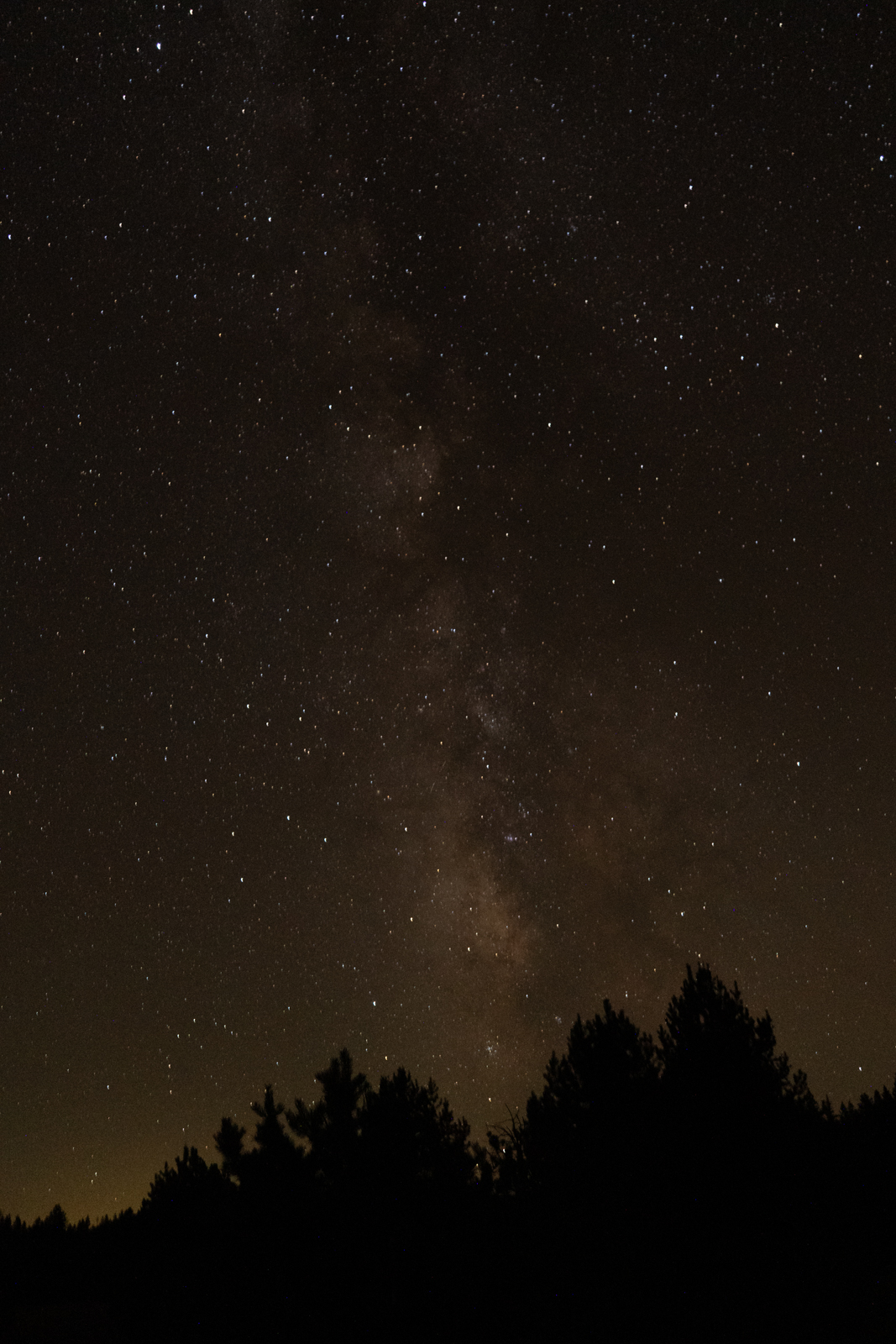
As they hiked, the hot afternoon sun gave way to the golden light of evening, the alpenglow setting Lassen Peak ablaze in brilliant shades of pink. A cool twilight soon enveloped the land, and stars began to emerge. As the trail grew darker, the party switched on headlamps to illuminate their path. Finally, the smells and glows of campfires greeted the weary explorers back at Manzanita Lake Campground.
A pot of “lasagna stew” cooked over a fire assuaged the sounds of grumbling stomachs, which yielded to laughter and stories of adventure – and misadventure – in the name of science from the sides of volcanoes around the world. Then, off to bed in sleeping bags and tents under dark and starry skies.
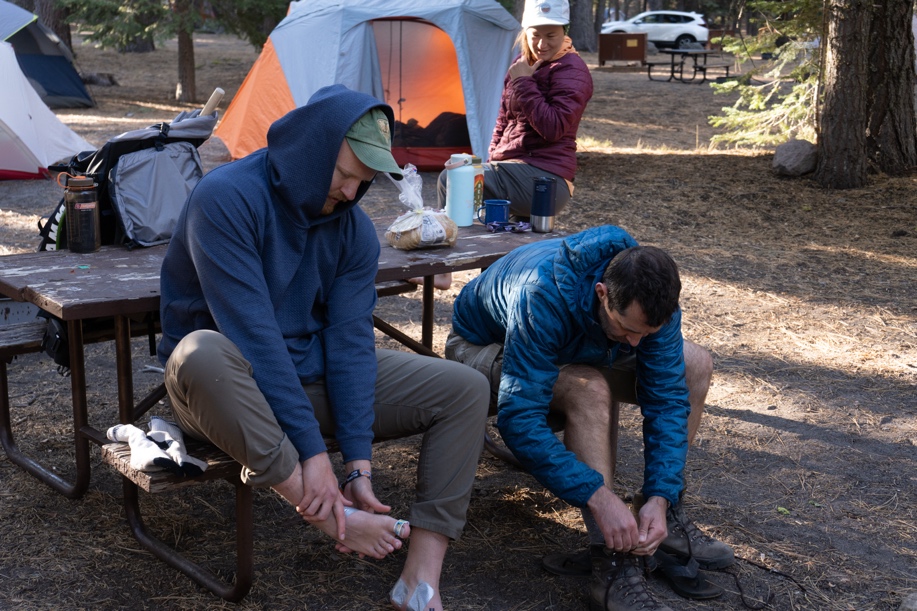
These days in the field, though few and far between, are essential to all that comes next. With dusty boots and a vehicle full of rock samples, the group returned to the University, where they would spend the next few months processing and analyzing the crystals found in these rocks.
“The field research is important because on the one hand it is the inspiration of questions that I want to address and that I take then into the lab,” Ruprecht said. “On the other hand, in a reverse view, it is the place of ground truthing against which I like to check laboratory and model results.”
—
For more information on Philipp Ruprecht and his work, please visit the website of the UNR Volcano Research Group: http://www.volcanology.info/
For more information on this project, as well as Spanish versions of each video, please visit: https://hitchcockproject.org/projects/rock-whisperers/