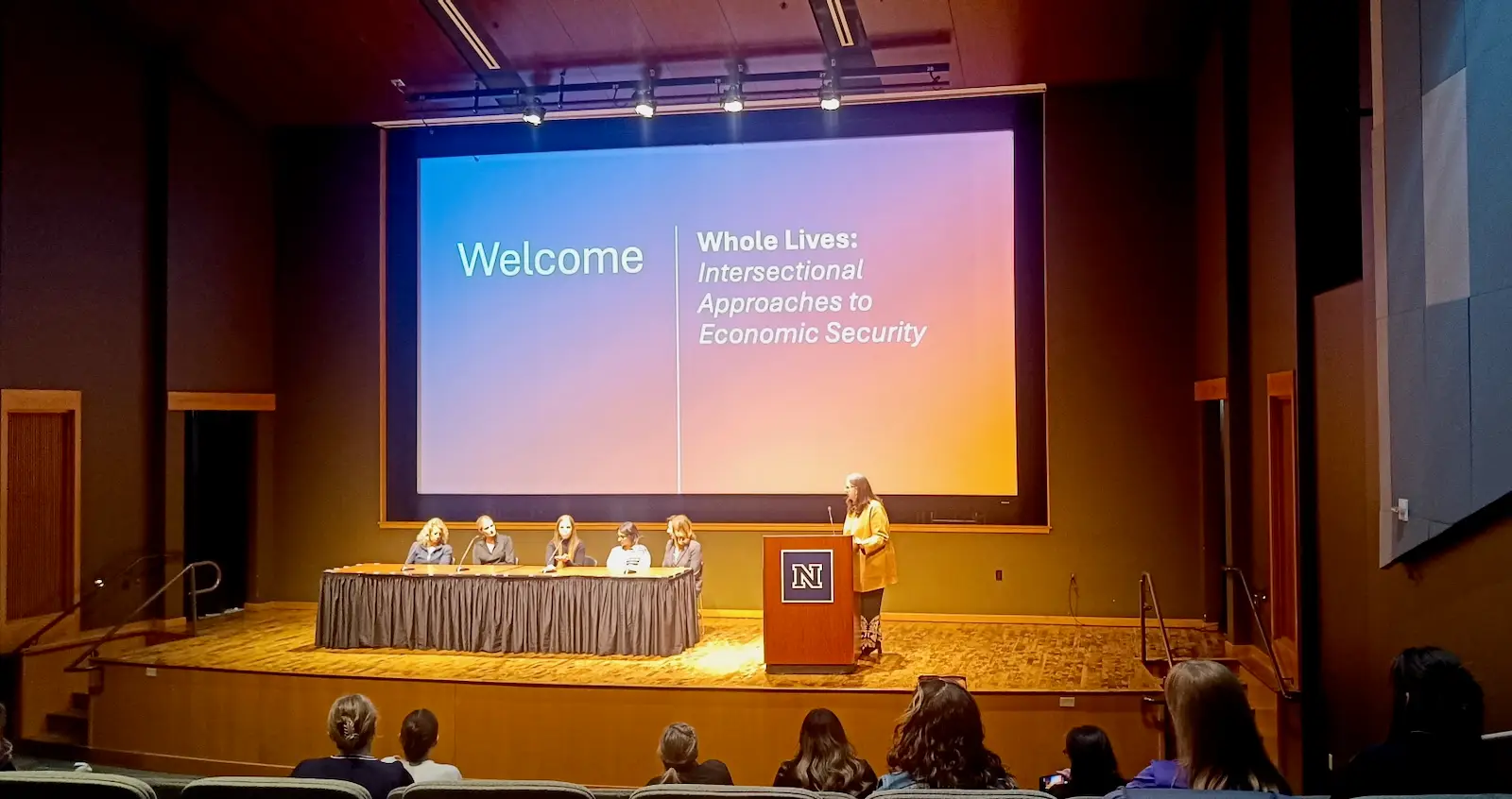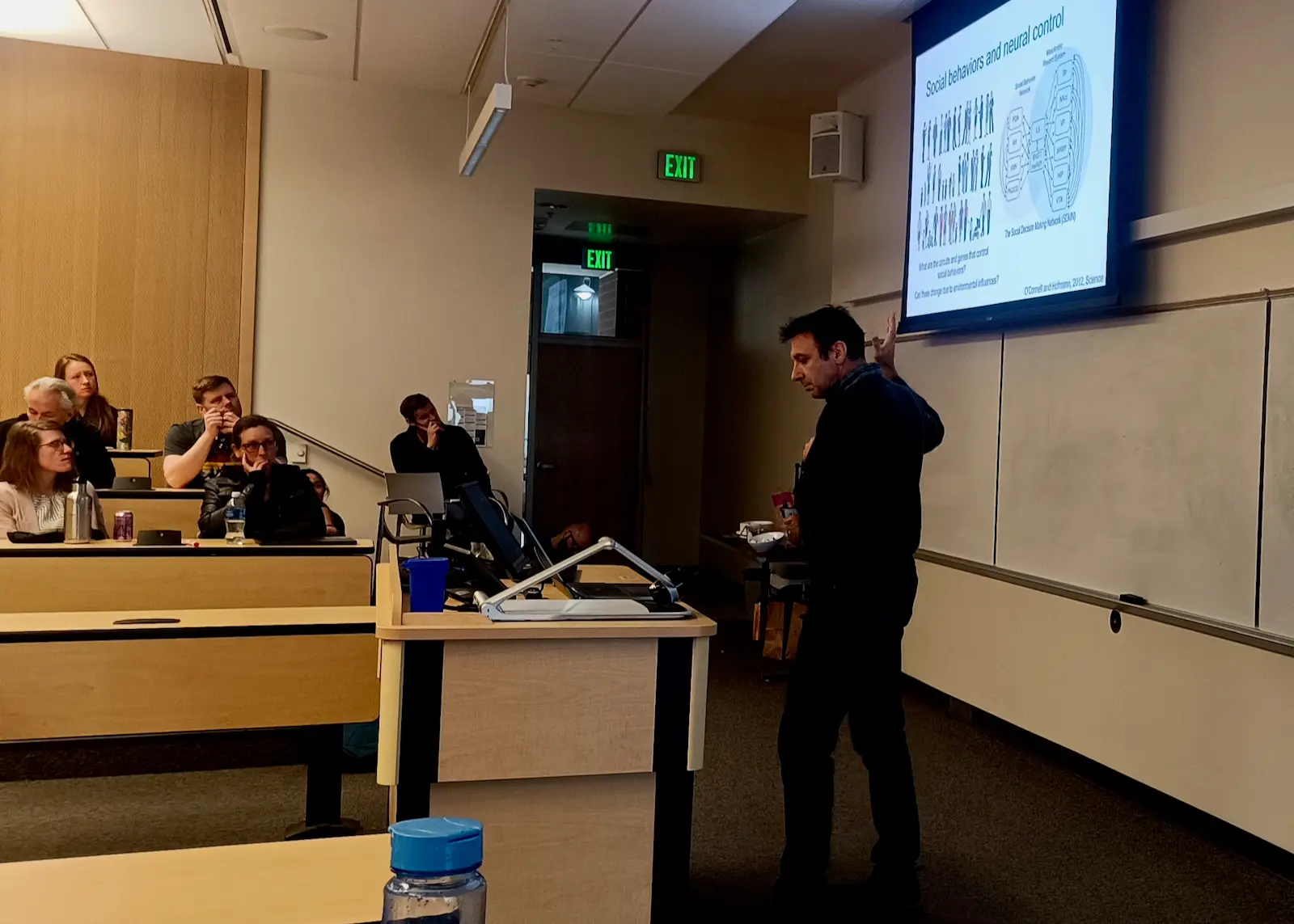
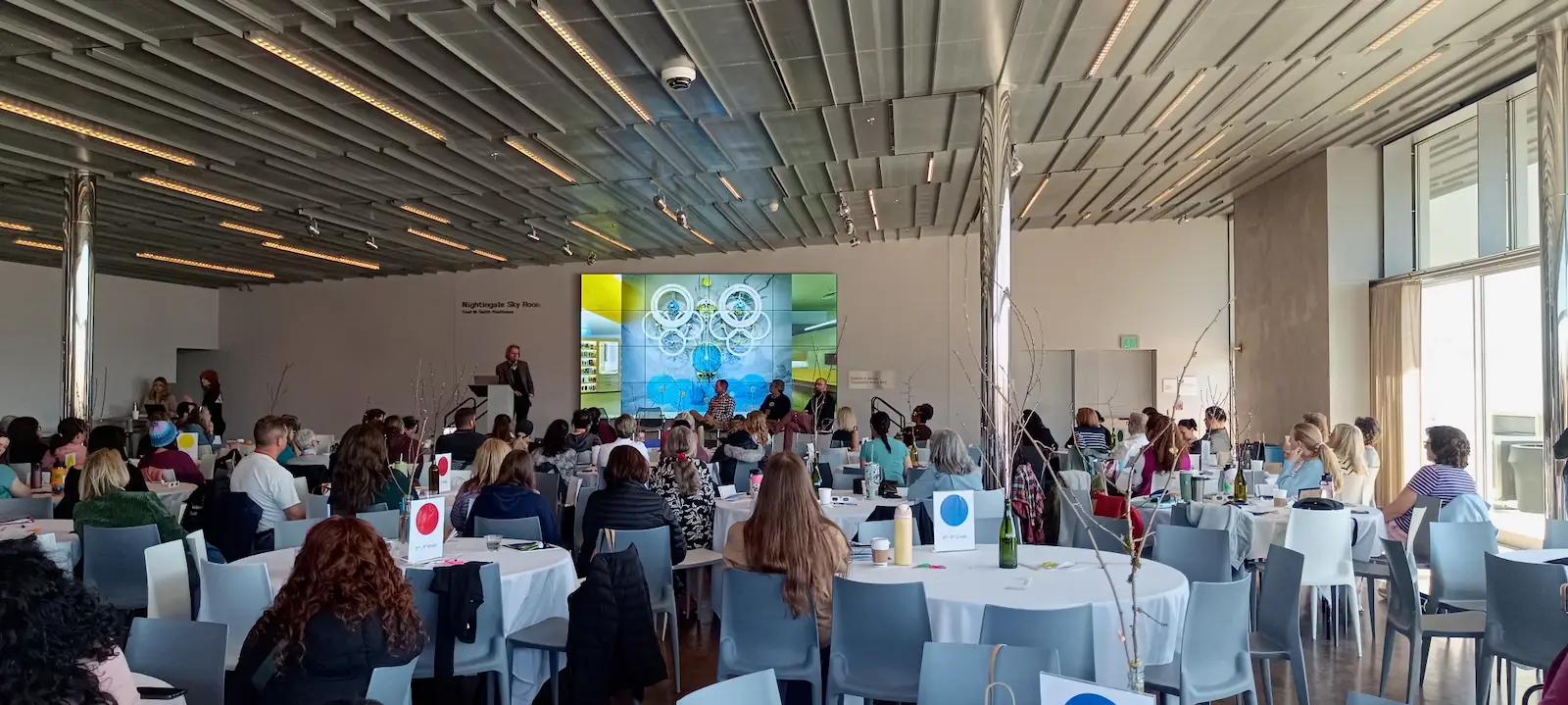
Scientists and an artist used Nevada’s ancient bristlecone pines to illustrate climate history and environmental change during a plenary session at the annual NV STEAM Conference hosted Saturday, March 7, at the Nevada Museum of Art.
The discussion, titled “Centuries of the Bristlecone,” brought together artist Jonathon Keats, ecologist Brian Smithers, Montana State University, and dendrochronologist Adam Csank, University of Nevada, Reno, to explore how the ancient trees are helping scientists and educators understand climate patterns and environmental resilience.
The session was part of the 2026 NV STEAM Conference, organized by the museum in partnership with the Desert Research Institute. The one-day event drew K-12 educators, scientists and artists to discuss ways to integrate science, technology, engineering, arts and math in classrooms.
Keats described a project inspired by Great Basin bristlecone pines, among the oldest living organisms, that reimagines timekeeping through tree growth rather than conventional clocks. Bristlecone pines can live up to 5,000 years, growing as little as one millimeter per year depending on environmental conditions.
“Dendrochronologists use them to study the past, but I started wondering whether they could help us think about the future,” Keats said.
Working with the museum, Keats installed a clock in Reno calibrated to bristlecone pine growth. One face tracks conventional time; a second moves according to the tree’s actual growth rate, which varies with precipitation and atmospheric carbon dioxide. This year, he said, the second face runs roughly 10 percent faster than standard time, reflecting that the bristlecones are currently growing faster than their historical average.

Smithers said bristlecone pines are uniquely adapted to harsh, high-elevation environments, growing near the upper tree line on specific soil types found almost exclusively in Nevada.
“They germinate in one place and never move,” Smithers said. “They’re living in whatever environment they get for thousands of years.”
Their slow growth and dense wood allow them to survive drought, pests and disease better than most trees, he said. Even after death, their wood can remain preserved for centuries in the region’s dry climate, providing researchers with ring records spanning thousands of years. Smithers cautioned, however, that the species is facing growing pressure from climate change, including the upslope migration of competing species and increasing wildfire activity at high elevations.
Csank explained how scientists use tree rings, a field known as dendrochronology, to reconstruct past climate conditions. By comparing ring patterns across multiple trees, researchers can build records extending thousands of years into the past, documenting droughts, volcanic eruptions, and long-term temperature shifts.
“Tree rings are a proxy record of climate,” Csank said. “They don’t record temperature or rainfall directly, but they record the tree’s response to those conditions.”
The panel also emphasized how tree-ring science can be incorporated into classroom lessons, giving educators practical ways to teach climate science and environmental history.
The conference offered Nevada teachers professional development credit and classroom resources designed to integrate science and the arts in STEAM education.
Alex Mounde is a graduate student in the Reynolds School of Journalism. He wrote this news brief for the Hitchcock Project’s Science and New Media course during spring 2026.