This story was written for the Science Communication Masterclass taught by Dr. John Cushman during fall semester of 2025.
Climate change is not a faraway future, a problem for our future generations; it is actively reshaping the ecosystems of U.S. national parks like Denali and Glacier today. As glaciers shrink, permafrost thaws, and wildlife patterns shift, park managers, scientists, and visitors alike are confronting a new reality: preserving these places means responding to climate change instead of pretending it will go away.
The Silent Glacier Exodus
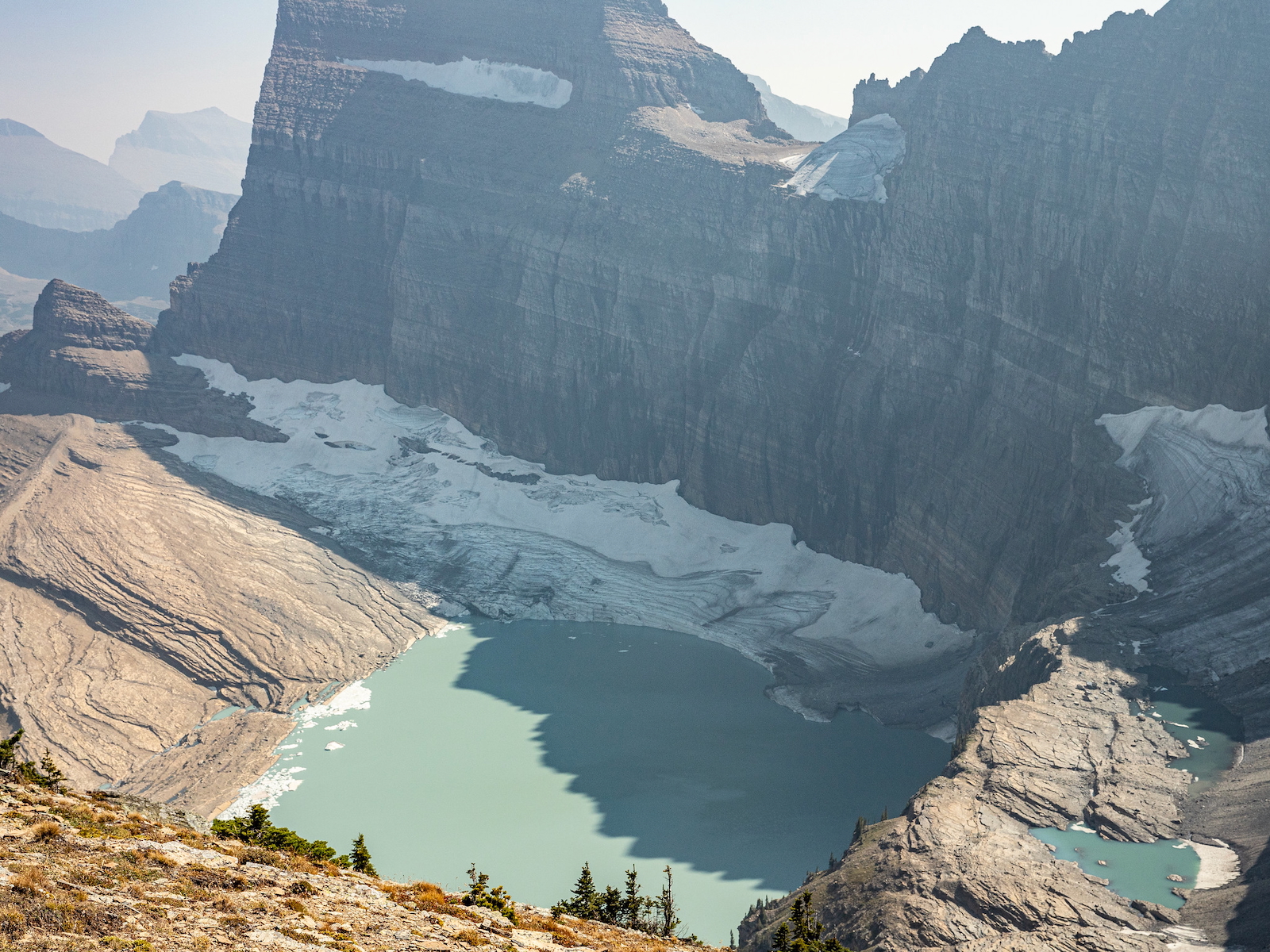
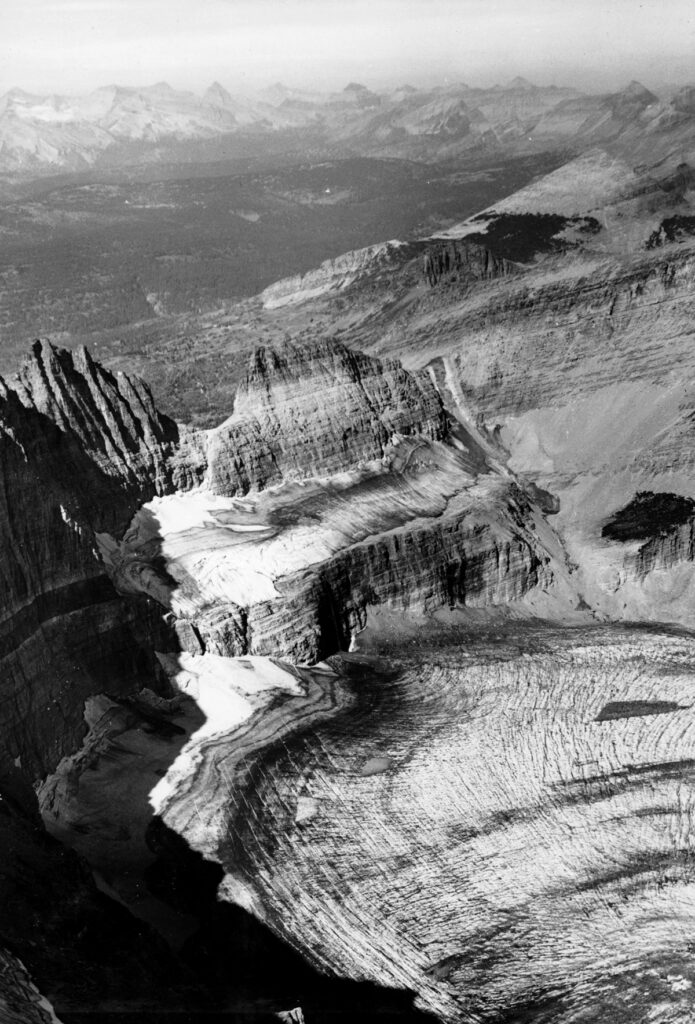
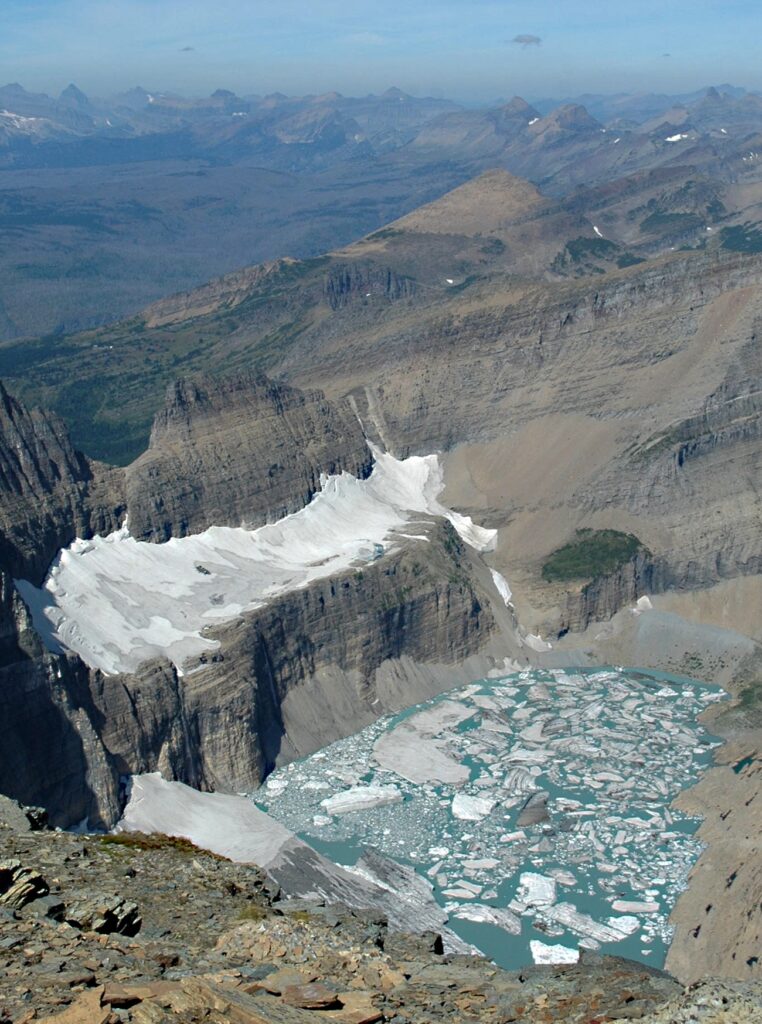
In Glacier National Park, Montana, Grinnell Glacier once loomed large. However, historic photographs tell a significant story of loss. Comparison of images from 1938 to 2009 shows a dramatic reduction in glacier mass, a visual testament to rapid warming (Northern Rocky Mountain Center, 2015). Mountain glaciers like Grinnell are among the most sensitive indicators of climate change. As temperatures climb, snowfall accumulation no longer matches melt, and over decades glaciers thin and recede (Northern Rocky Mountain Center, 2015).
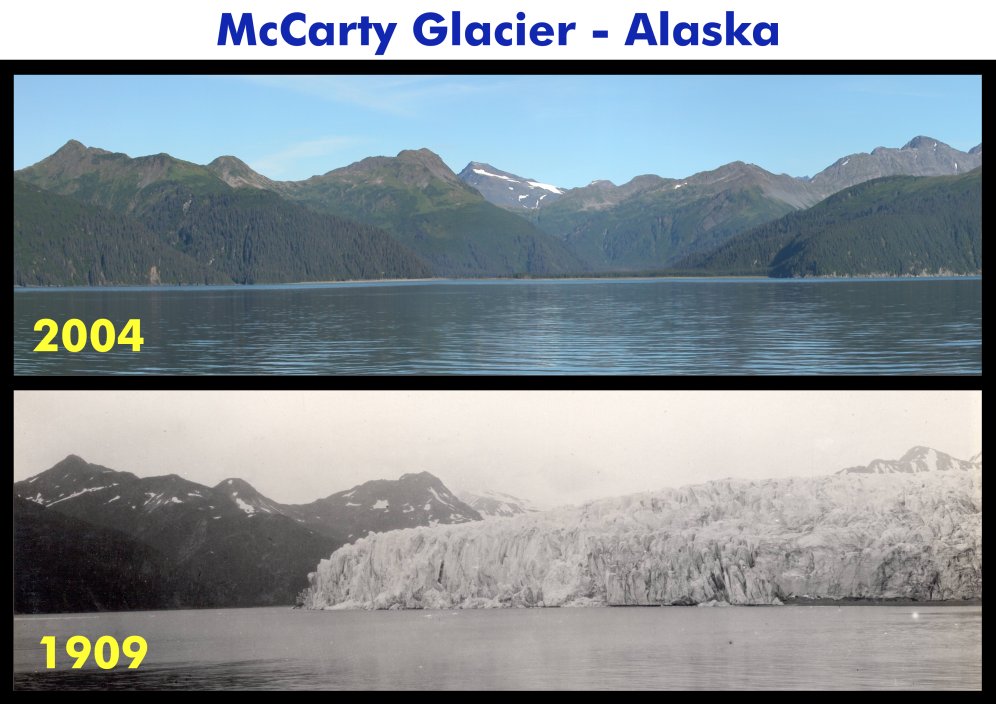
But this story is not limited to Glacier National Park. Across Alaska, glaciers in places like Glacier Bay are also retreating at alarming rates. Glacier Bay National Park and Preserve, covering over 1,500 square miles, is a particularly vivid example. Historically, glaciers advanced and retreated in natural cycles. Today, scientists observe rapid thinning, stagnation, and retreat across more than 95% of Alaskan glaciers (NPS, 2025). According to the National Park Service, the average temperature in Alaska has increased by about 3°C since the mid-20th century, intensifying the pace of ice loss.
Denali’s Deep Freeze, Melting Away
While Glacier National Park and Glacier Bay offer isolated views, Denali National Park & Preserve lies at the center of climate change’s impact on the Alaskan landscape. Glaciers cover roughly 17% of Denali or about 1,563 square miles (NPS, 2025). As early as the 20th century, explorers and researchers documented glacier positions using photography and field notes. Today, park scientists use GPS surveying, satellite imagery, and repeat photography to measure glacier mass changes. Their measurements show that many glaciers in Denali are thinning at an average rate of about 20 m per year, retreating both vertically (losing thickness) and horizontally (NPS, 2016).
According to the NPS, slight warming has already triggered large-scale ecological shifts. Perhaps the most visible sign of thawing permafrost is along Denali’s only road: the Pretty Rocks landslide. As permanently frozen ground destabilizes, sections of the road slump and slide. This damage poses not only logistical challenges, but also safety and infrastructure concerns (Pope, 2021).
“The wild lands of Alaska national parks are changing at a rapid pace due to the disproportionate increases in temperature at high latitudes… Climate has fundamentally shaped the landscape of high-latitude parks, but now climate change is redefining them,” says physical scientist Pamela Sousanes (Sousanes & MacCluskie, 2023).
Wildlife on the Edge: Caribou, Dogs, and the Tumultuous Tundra
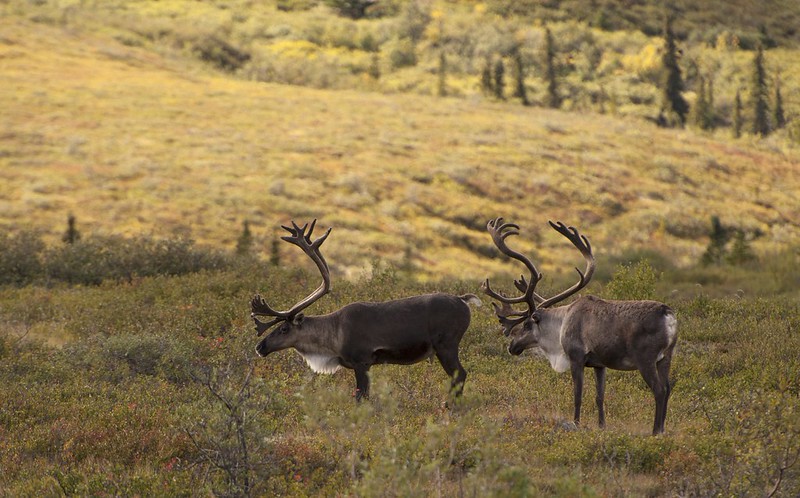
As permafrost thaws and vegetation shifts, wildlife like caribou are experiencing profound habitat change. According to the Denali Wilderness Character Narrative, Denali’s caribou herd numbers around 1,760, and the balance of tundra vegetation, calving areas, and seasonal migration depends on stable climate conditions (Denali National Park & Preserve, 2021).
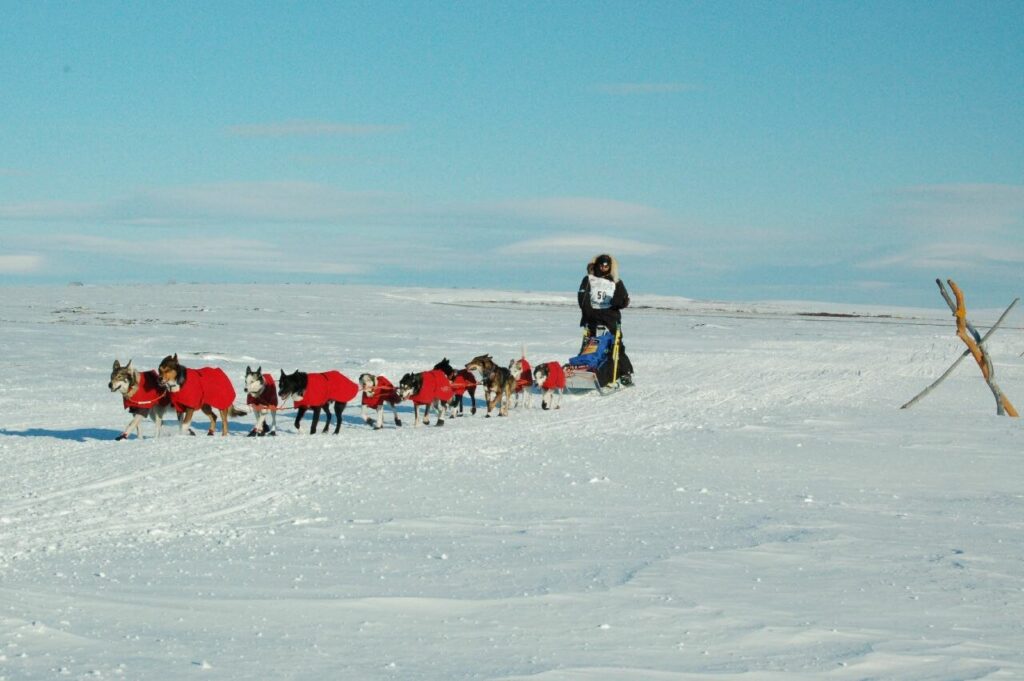
This “greening” of the tundra can reduce the open grazing habitat that caribou rely upon, potentially altering migration patterns, survival rates, and predator-prey dynamics. Last but not least, sled dogs, historically used by park rangers and guides in Denali and native Alaskans, represent a living connection to traditional park culture.
These hardworking pups also face indirect impacts. Warmer winters, reduced snow cover, and changing trail conditions challenge their traditional roles. As Denali changes, the very human and cultural systems connected to these animals must adapt.
Beyond Science: The Real-World Stakes
Glaciers retreating, permafrost thawing, and caribou habitat shifting are more than scientific curiosities. They threaten the ecological integrity, cultural meaning, and visitor experience of national parks like Denali and Glacier Bay. Thinning glaciers reduce water inputs to rivers, which can affect downstream aquatic ecosystems (NPS, 2025). Loss of permafrost can trigger landslides, alter hydrology, and destabilize slopes (Pope, 2021). Changing vegetation threatens species like caribou. Their food sources and predator-prey interactions may dramatically shift. In terms of the cultural and management challenges, they are already here. Sled-dog culture and historical practices have already been disrupted, changing a centuries-long tradition of using sled dogs in their lives. Our national parks serve as living laboratories, offering some of the clearest, most accessible evidence of climate change’s impact on natural systems.
What Can Be Done: Actions and Solutions
Continued and expanded glacier monitoring is critical. Denali already uses GPS, satellite imagery, and repeat photography, but increased funding could support more frequent surveys, particularly in remote or understudied glaciers to gain a better understanding of the changing landscape (NPS, 2016). Glacier Bay could benefit from similar efforts, especially in documenting the thinning and retreat of its many tidewater glaciers. For example, in Denali, engineering efforts can anticipate continued slope instability and advise best practices for how to invest in long-term road maintenance, realignment, or even rerouting where necessary. The park’s “Climate Change Response Strategy” already highlights these challenges (NPS, 2023).
By making climate change visible and personal, national parks can inspire visitors to take note and spread awareness. Beyond park boundaries, reducing greenhouse gas emissions remains essential. Certain national parks have already taken the first steps to combat emissions. All the shuttles in Zion National Park are now electric. Solar arrays have been employed at Cape Cod National Seashore, and hybrid ferries are being employed at Alcatraz Island (NPS, 2025). However, with the recent withdrawal from the Paris Agreement and the signing of the One Big Beautiful Bill Act, actions to address climate change remain a low priority of the current U.S. administration. In response, scientists, park managers, and the public must advocate for policies that address the root causes of warming, because no level of adaptation can fully preserve glaciers if warming continues unchecked.
Conclusion

The images, data, and personal experiences from Denali and Glacier National Parks paint a clear picture: the national parks many of us think of as timeless are undergoing rapid transformation. But with awareness comes an opportunity for all to help combat the climate crisis. When asked how to address the climate crisis and its effects on national parks, Pamela Sousanes responded by saying:
“…the most important thing we can do as park scientists is to do our job well and inform the public on the changes that are occurring on their public lands. We need to have scientists in parks, boots on the ground, recording the data and documenting the changes that are unfolding. These high-latitude national parks are at a critical threshold where the ground is literally melting below our feet. We (the hydrologists, the biologists, the glaciologists, the climate scientists) are all stewards of these wild places. We provide the data and documentation to park superintendents and park managers so that they can make informed decisions” (Sousanes, personal communication, 2025).
References
Anchorage Convention & Visitors Bureau. (n.d.). Iditarod Sled Dog Race. Retrieved December 8, 2025, from https://www.anchorage.net/winter/events/iditarod-sled-dog-race/
Black, T. L., & Kurtz, D. D. (2022). Maritime glacier retreat and terminus area change in Kenai Fjords National Park, Alaska, between 1984 and 2021. Journal of Glaciology, 68(272), 1041–1248. https://npshistory.com/publications/kefj/jg-55-2022.pdf
CBS News. (2015, September 1). Vanishing glaciers of Alaska. https://www.cbsnews.com/pictures/repeat-photography-of-alaskan-glaciers/11/
Chambers, N., M. MacCluskie, K. Bartz, B. Borg, M. Cameron, W. Deacy, G. Hilderbrand, K. Joly, A. Larsen, T. Lewis, B. Mangipane, C. McIntyre, J. Mizel, P. Owen, D. Payer, J. Schmidt, and M. Sorum. 2023. Research Review: How Wildlife are Responding to a Warming Climate. Alaska Park Science 22(1): 56-69. Retrieved from https://www.nps.gov/articles/000/aps-22-1-5.htm
Denali National Park & Preserve. (2021, September 17). Caribou. U.S. National Park Service. https://www.nps.gov/dena/learn/nature/caribou.htm
Denali National Park & Preserve. (2025, May 21). Pretty Rocks landslide. U.S. National Park Service. https://www.nps.gov/dena/learn/nature/pretty-rocks.htm
Hasemyer, D. (2015, May 26). Alaska photo project captures climate change in a thousand wows. Inside Climate News. https://insideclimatenews.org/news/26052015/alaska-photo-project-captures-climate-change-denali-national-park/
National Parks Conservation Association. (2012, January 5). 7 photos of Denali in winter. https://www.npca.org/articles/1338-7-photos-of-denali-in-winter
National Park Service. (2025, January 13). Climate Change Response Strategy. https://www.nps.gov/subjects/climatechange/response-strategy.htm
National Park Service. (2016). Climate Monitoring in Denali. Retrieved from https://www.nps.gov/articles/denali-monitoring-climate-change.htm
National Park Service. (2012). Denali’s Climate Change Response. Retrieved from https://www.nps.gov/articles/denali-climate-change-response-2012.htm
National Park Service. (2025). Glacier Bay National Park & Preserve: Climate Change. Retrieved from https://www.nps.gov/glba/learn/nature/climate-change.htm
National Park Service. (2025). Glacier Bay Fact Sheet. Retrieved from https://www.nps.gov/glba/learn/management/upload/2025-Glacier-Bay-Fact-Sheet-508.pdf
Northern Rocky Mountain Science Center. (2018, July 5). Grinnell Glacier from Mount Gould, 1938-1981-1998-2015. U.S. Geological Survey. https://www.usgs.gov/centers/norock/science/grinnell-glacier-mount-gould-1938-1981-1998-2015
O’Harra, D. (2012, April 15). Invading shrubs transforming Arctic tundra, studies say. Anchorage Daily News. Retrieved from: https://www.adn.com/alaska-news/article/invading-shrubs-transforming-arctic-tundra-studies-say-0/2012/04/15/
Pope, K. (2021, July 8). Thawing permafrost prompts Denali National Park to reimagine its future. National Geographic. Retrieved from https://www.nationalgeographic.com/environment/article/thawing-permafrost-forces-denali-national-park-to-reimagine-its-future
Sousanes, P. J. and M. MacCluskie. 2023. High-latitude national parks on the cusp of change. Alaska Park Science 22(1): 1-5. Retrieved from: https://www.nps.gov/articles/000/aps-22-1-0.htm
Sousanes, P. J., K. Hill, D. Swanson, J. O’Donnell, P. Kirchner, D. Kurtz, M. Loso, and A. Bliss. 2023. Crossing the zero-degree threshold. Alaska Park Science 22(1): 6-21. Retrieved from: https://www.nps.gov/articles/000/aps-22-1-1.htm Email interview with Pamela Sousannes, physical scientist at Denali National Park and Reserve.
Ryan Lockhart is a biotechnology master’s student at the University of Nevada, Reno. He pairs his expertise in experimental protocol development with an enduring interest in linguistics, an academic pursuit rooted in his time living and studying in Lyon, France. He has visited more than 40 national parks around the U.S.