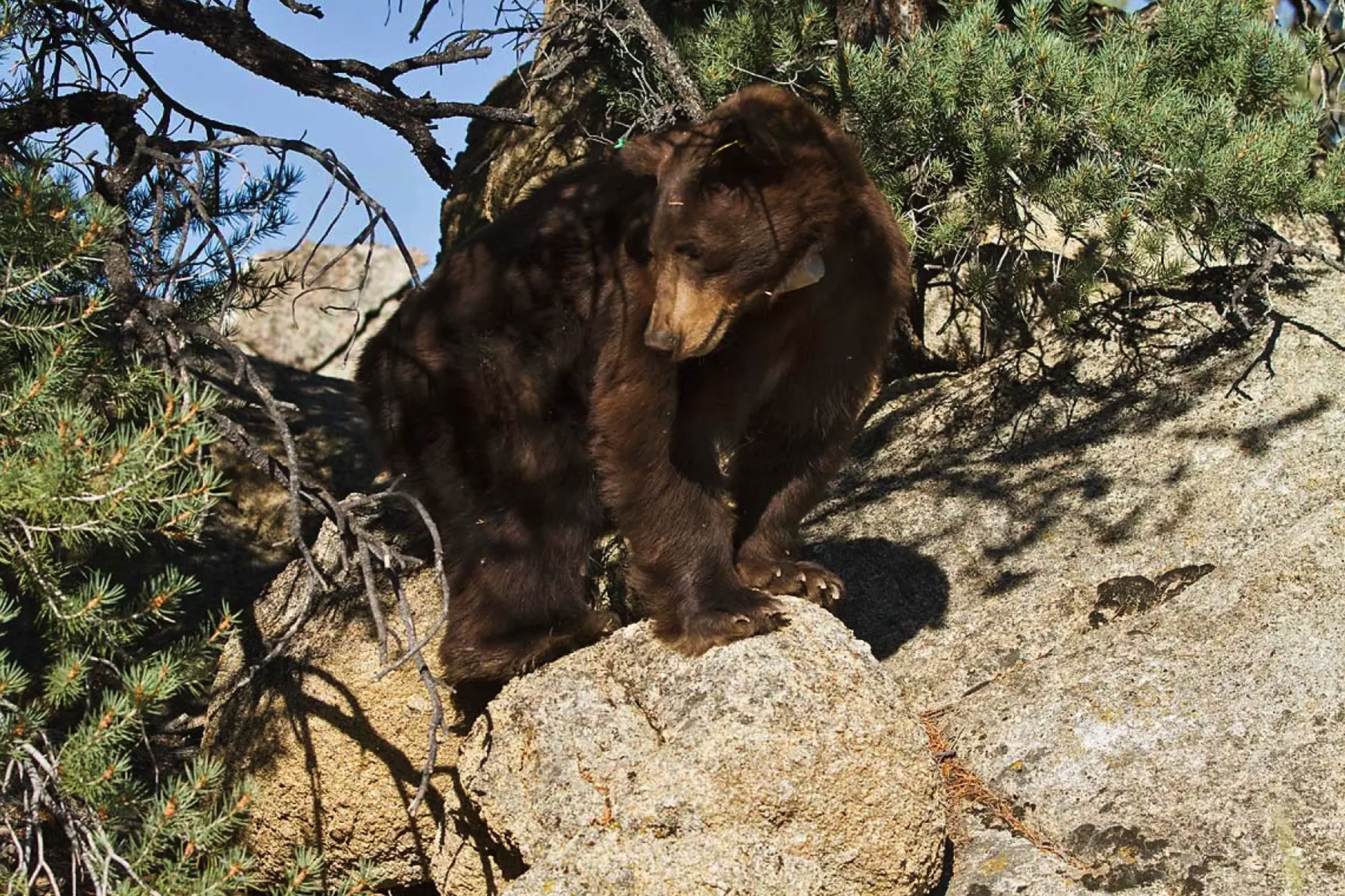
This story was shared with permission from KUNR Public Radio. For an audio version of the story, please visit the KUNR website. Above: The Tahoe Interagency Bear Team encourage giving bears plenty of space and never feed them. Derek Reich, Nevada Department of Wildlife/Nevada Today.
Summer may be winding down, but for bears in the Tahoe region, now is the perfect time for a fall feast.
During early fall, bears enter an intensive eating period to build up body fat before hibernation. They can consume up to 25,000 calories a day and spend up to 20 hours looking for food. While bears may be bulking up for winter, human food should never be a part of their diet.
The Tahoe Interagency Bear Team reminds visitors and locals to secure anything that could be an easy meal for bears. This includes garbage, pet food, and birdseed.
Kenzie Margiott with the Interagency said, “Bears are incredibly intelligent, so once they learn that a neighborhood or a particular trash can can provide an easy meal, they’re more than likely to come back.”
Margiott said if an interaction with a bear does occur, do not feed them and give them plenty of space.
She added a reminder for those recreating in the Tahoe Basin to utilize food storage lockers on campgrounds, keep scented things out of tents and secure any food. If on the road at night or in the early morning, slow down and be alert.
Lupe Alvarez is a graduate assistant for the Hitchcock Project for Visualizing Science in the Reynolds School of Journalism. She is the 2027 fall intern for KUNR and the Hitchcock Project for Visualizing Science