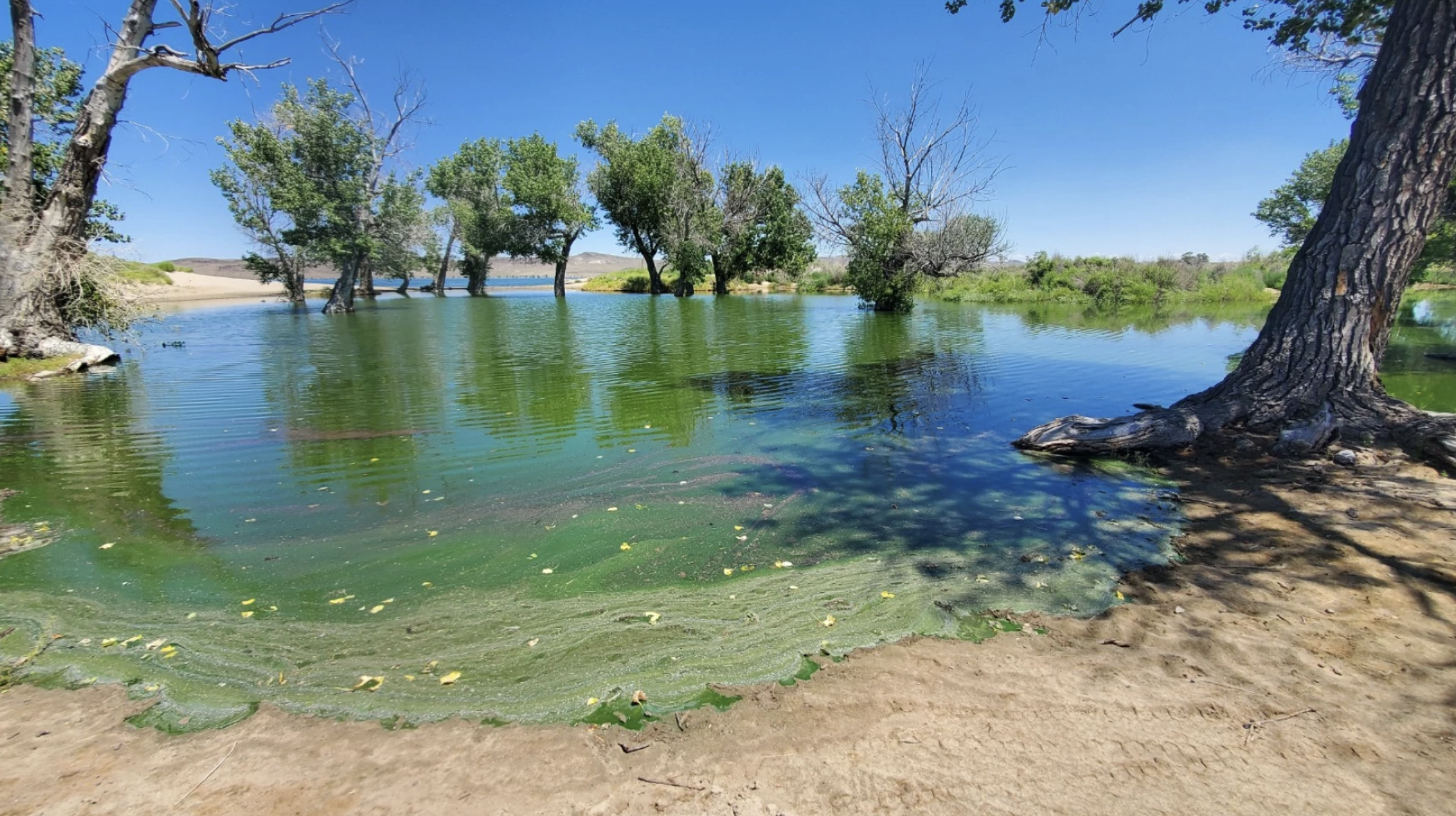
This story was shared with permission from KUNR Public Radio. For an audio version of the story, please visit the KUNR website. Above: Harmful algae, also called blue-green algae, can look like pea soup, paint, or grass clippings on the surface of water, as seen here at the Lahontan Reservoir in Nevada. Credit: Weston Fettgather/Nevada Department of Environmental Protection.
The water at Washoe Lake sparkles in the mid-morning sun.
Wearing his muckboots and blue gloves, Weston Fettgather, collects a sample at the water’s edge, where a green, soupy substance has clumped on the surface.
This naturally occurring cyanobacteria, though common in lakes and ponds, can quickly turn into a toxic algae bloom.
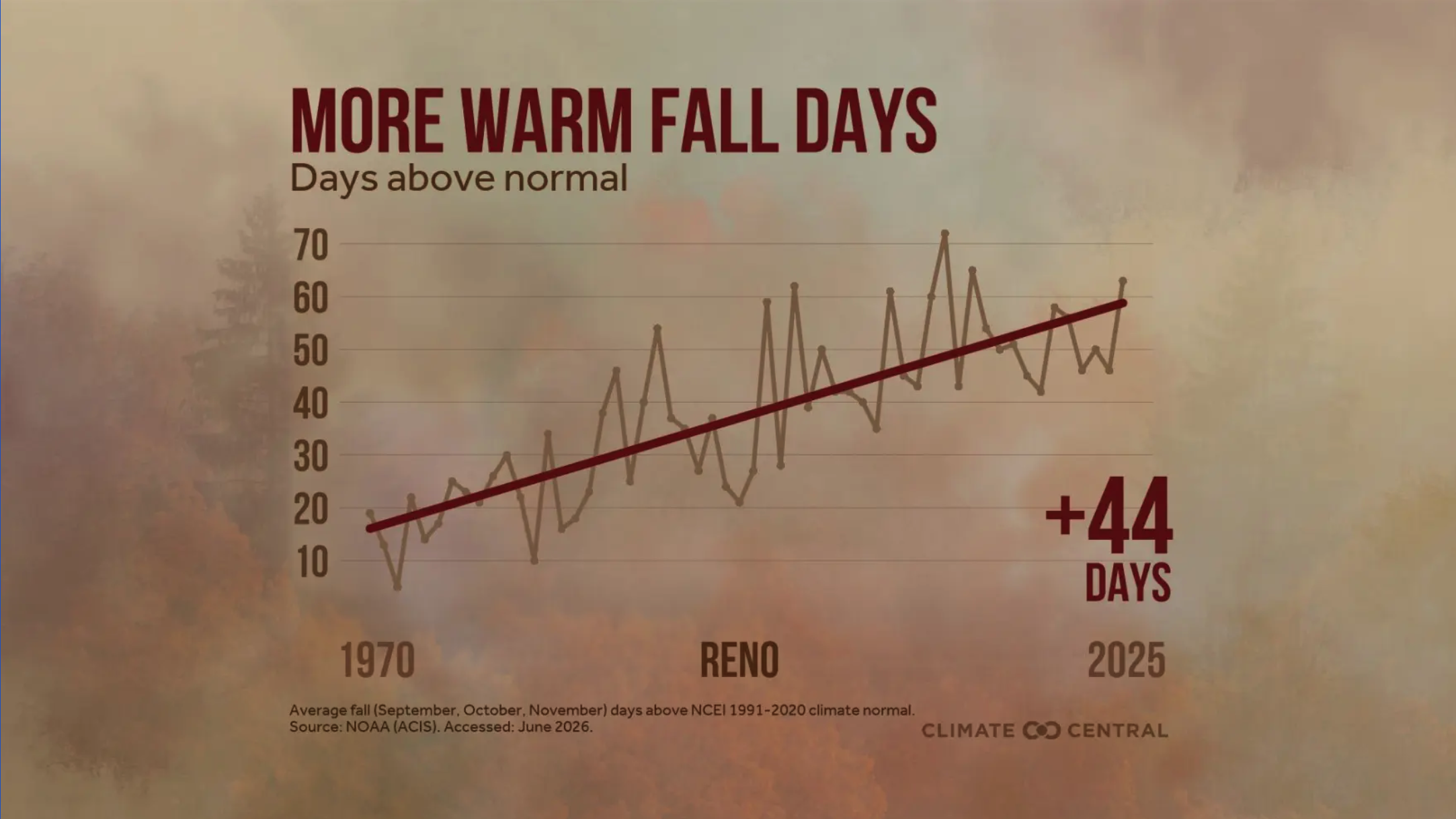
Fettgather works with the Nevada Division of Environmental Protection, and said algae concentrationsthrive in warm water and air. As the summer heat increases, he said individuals need to be on the look out while visiting recreational areas, as harmful algae blooms can be toxic to humans and pets if ingested.
“Nausea, vomiting, and diarrhea are really common symptoms with humans and pets after exposure. With dogs you might see lethargy and imbalance, if you do notice that the best thing to do would be to immediately go to a doctor or bring your pet to a vet,” he said.
The Harmful Algae Blooms Taskforce encourages the public to be “Algae Aware” and report any potential sightings of algae blooms to the Harmful Algae Blooms Dashboard. The task force includes the Nevada Department of Agriculture, Department of Human Services, and the Department of Wildlife. It works to monitor algae blooms across the state by using a combination of satellite remote imaging, and on the ground reporting.
“Cyanobacteria can take on a couple different appearances, usually when it’s actively growing, it’s bright green floating on the surface,” he said.
The algae is often described as looking like spilled green paint or pea soup.
He said thorough testing will need to be done to determine if each algae sample collected contains toxins. And that reporting algae blooms is crucial for protecting public health, aquatic ecosystems, and recreational resources.
Lupe Alvarez is a graduate assistant for the Hitchcock Project for Visualizing Science in the Reynolds School of Journalism. She is the 2026 summer intern for KUNR and the Hitchcock Project for Visualizing Science