In March, Reynolds School of Journalism student Kathleen Leslie travelled with students from the Orvis School of Nursing to Kampot, Cambodia to report on the Orvis School’s global health exchange program. This story was made possible with support from the Office of Global Engagement in the Orvis School of Nursing and the Hitchcock Project for Visualizing Science.
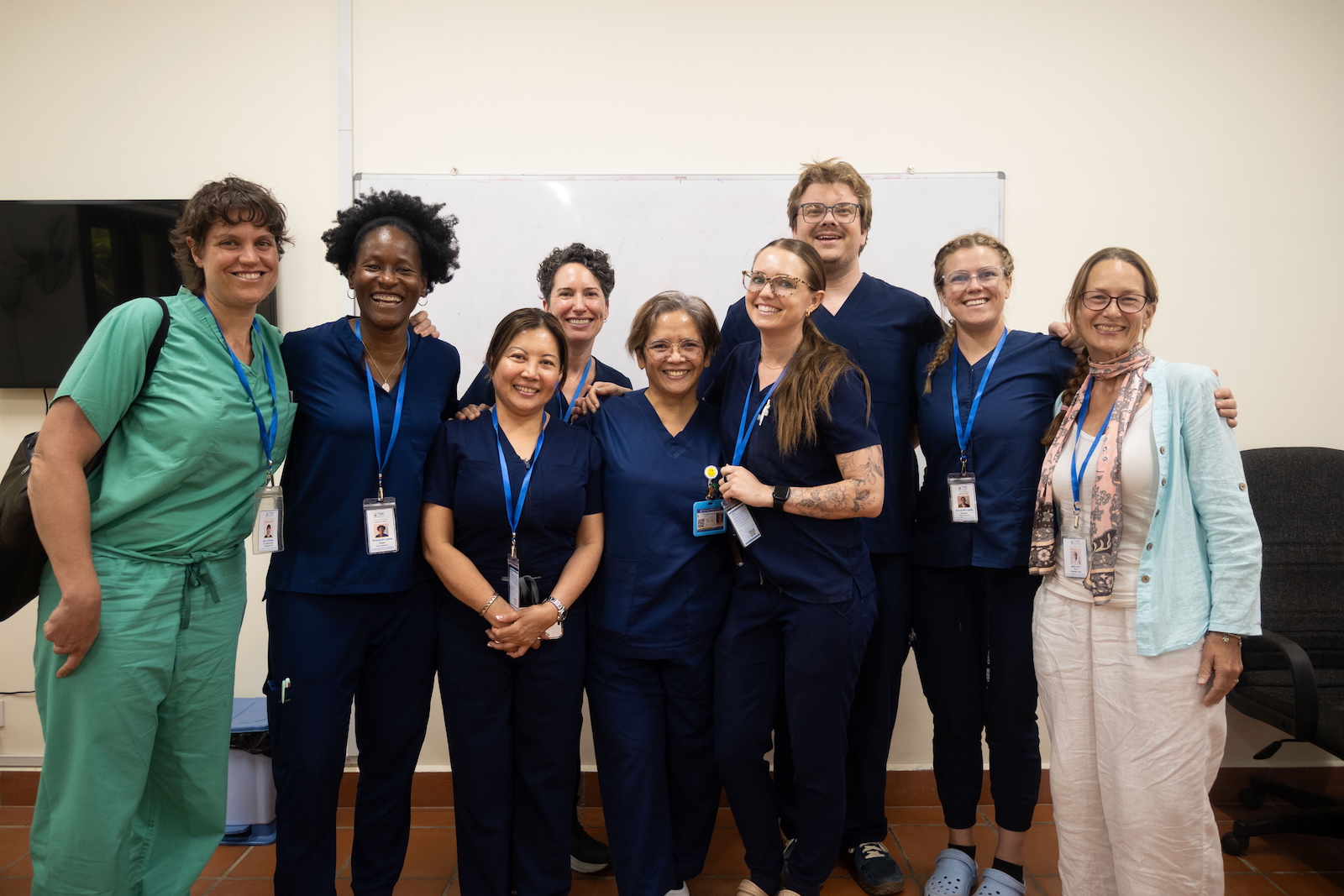
Above: At Sonja Kill Memorial Hospital in Cambodia, Orvis School students take part in lectures and meet other volunteers who are there to learn, like Joanna Ortega [far left, in green], a resident from Highland Hospital in Oakland, California. The Orvis students wear navy blue scrubs to match the color the nurses wear at Sonja Kill. From left to right: Crystal Miles-Threatt, Joy Dilley, Heather Waite, Cathy Pingoy [Chief Deputy Nursing Officer at Sonja Kill], Kelsi Kolle, Alex Henrikson, Amanda Scudder, Kristin Knowles [Orvis School Program Advisor]. Credit: Kathleen Leslie.
Every morning in Kampot, Cambodia, as tuk-tuks and motorbikes weave through the busy streets, a woman makes the same 20-minute journey to Sonja Kill Memorial Hospital carrying fresh fruit for her husband. On this March morning, it’s mangos.
She steps into the inpatient ward, places the mangos beside her husband’s bed and sits next to him in a small wooden chair. Throughout the day, she feeds her husband and wipes his forehead with a wet cloth when his temperature rises, and stays by his side. When evening comes, their son arrives to help take care of him.
Family is available day and night to monitor and meet any of the patient’s needs that may arise, which for Heather Waite, a student from the Orvis School of Nursing at the University of Nevada, Reno, was different from what she’s seen in hospitals in the United States.
“The family was really integrated into the care,” Waite said, after watching them care for one another in vulnerable moments.
Waite, who is currently pursuing a degree in Nurse Education, has a background in different settings like nursing homes and home health. In March, she and five other students from the University traveled to Kampot, Cambodia for the Orvis School’s second annual global health exchange program.
The program focuses on the transfer of practices and knowledge between healthcare systems. Students experience valuable firsthand learning, working directly alongside nurses at Sonja Kill Memorial Hospital, and learn how healthcare impacts communities around the world.
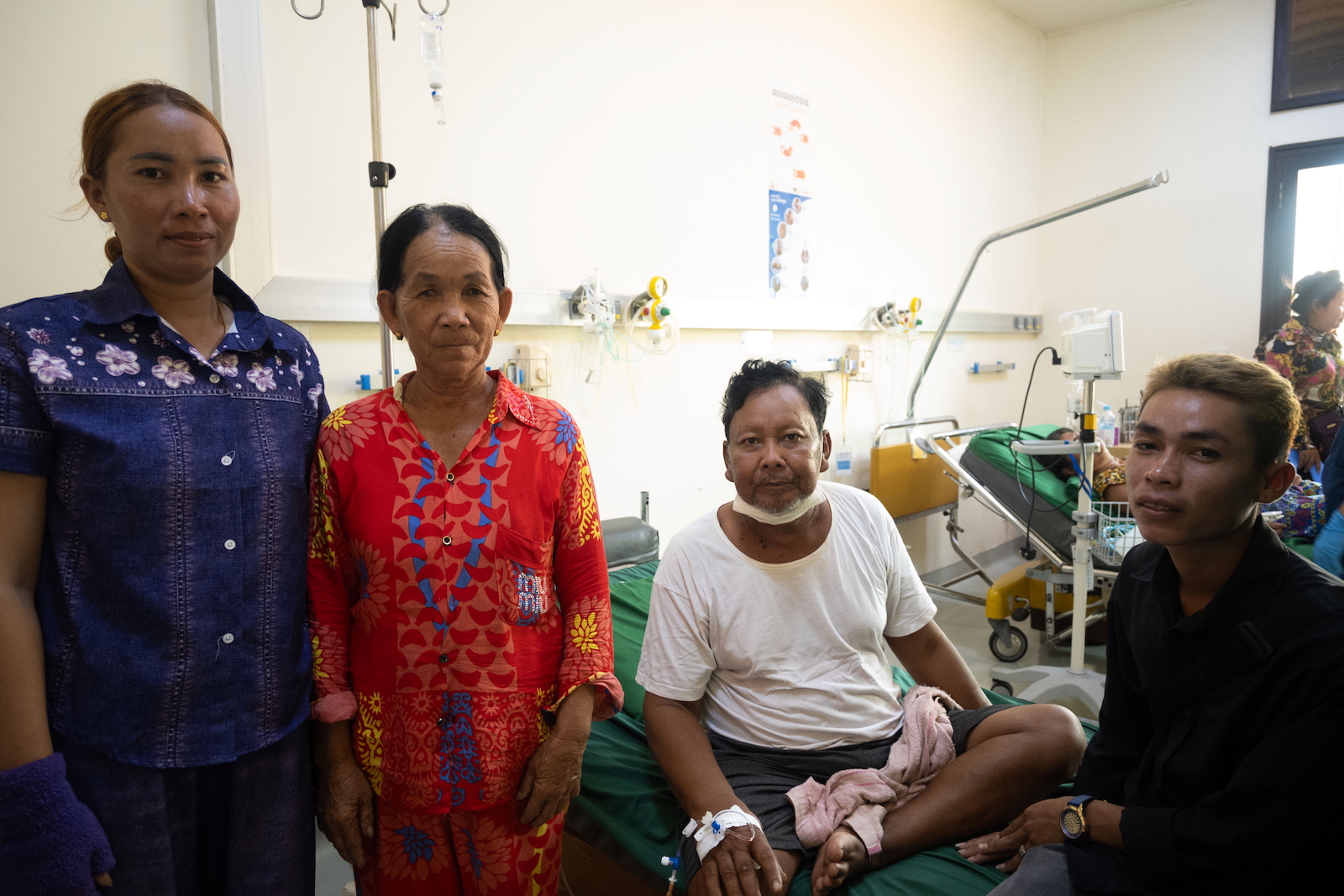
A patient and his family Sonja Kill Memorial Hospital. They sat next to the man and chatted with him as nurses came in and out to check in on him. Credit: Kathleen Leslie. 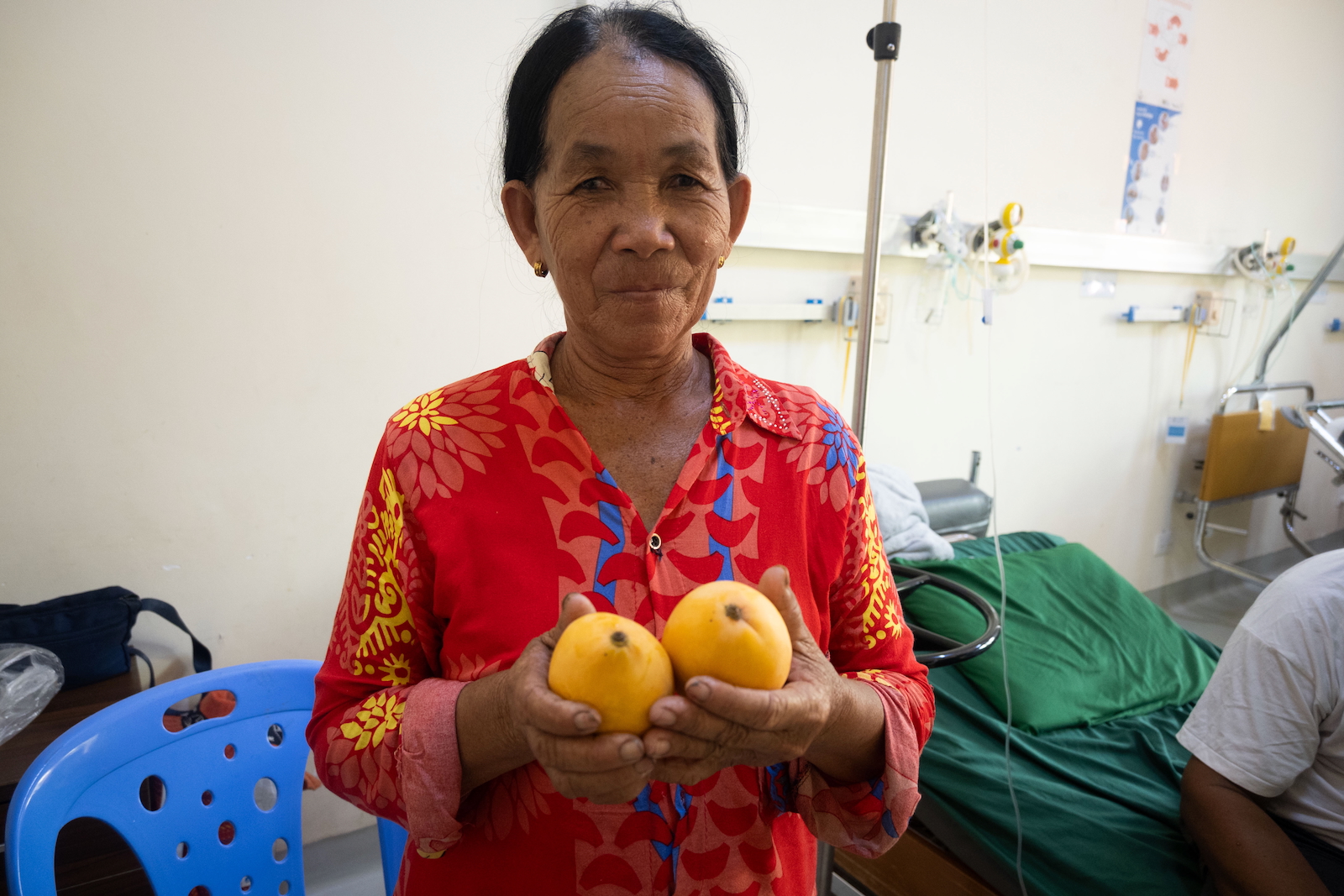
On an early morning at Sonja Kill Memorial Hospital, a woman holds out fresh mangos that she brought for her husband. Credit: Kathleen Leslie.
Caring across cultures
While in Cambodia, students had the opportunity to see how different cultures have different medical practices and how the impact of healthcare transcends international boundaries. One of the biggest differences was in who cared for the patients.
In the United States, many of the responsibilities around patient care are carried out by certified nurse assistants, or CNAs. A typical day for a CNA consists of helping patients with their activities of daily living, including eating, bathing, dressing, transferring, toileting, and assisting with mobility.
CNAs often spend more time with patients than any other healthcare worker. This is important as they act as a bridge between patients and the other medical staff. CNAs take note of changes in a patient’s medical condition and report them.
At Sonja Kill Memorial Hospital, Waite watched those same moments unfold differently.
In Cambodia, there isn’t a designated role for a CNA. The usual responsibilities of this role are divided between nurses and family members, but much of it rests on the patient’s relatives.
“Most of the patients in Cambodia, they always have a caretaker, at least one with them,” Chaang Reasmey, head of the hospital’s inpatient department, said. “The caretaker will take care of the person while they stay in the hospital…feeding, bringing them to the toilet, helping them move around.”
Cathy Pingoy, Deputy Chief Nursing Officer at Sonja Kill Memorial Hospital, said that in Asian cultures, including Cambodia, there are strong ties to family. And family is expected to take care of one another when sick, even if it means making a sacrifice.
She said that because of this expectation, it’s not uncommon for nurses to let families attend to most of the daily needs, despite the fact that such activities may create a burden for relatives.
“You cannot put everything with the family, but you could collaborate with the family,” Pingoy said. “It’s a teamwork of making sure their daily needs are met.”
Ideally, she doesn’t want families to replace nurses, but instead to share the care. Nurses teach family members how to safely help patients move, eat, and recover while still being responsible for the clinical care.
“The bedside care of the patient is a primary responsibility of the nurse,” Reasmey said. “We can teach the relatives how to do it, but not put the sole responsibility on them.”
Reasmey said Cambodia has relatively few nursing homes, and those that exist are often expensive. As a result, older adults typically live with their children or other relatives who help care for them when they become ill. Because families are already accustomed to providing care at home, that role often extends to the hospital.
The presence of family creates a support system many patients from the United States don’t have, but it also places significant responsibility on relatives who may have jobs, children and other responsibilities.
For the woman with the mangos, since her husband has been in the hospital, she temporarily closed her juice shop to look after him during daytime hours. Although the juice shop is not one of the family’s main sources of income, it brings her joy.
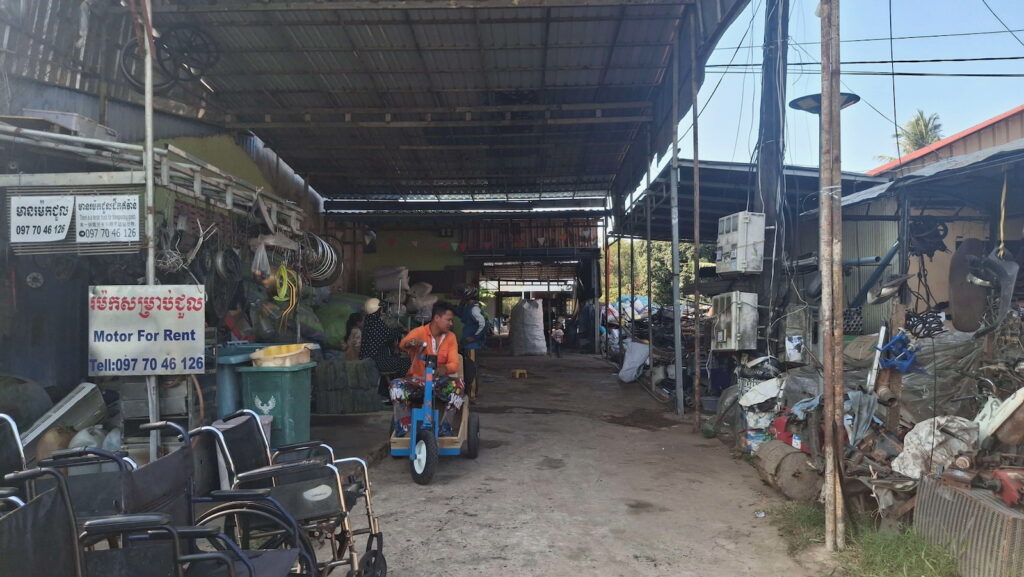
She was willing to put this business on pause while caring for her husband. The woman and her family primarily rely on income from their other two family businesses, one where they plant and sell crops and the other a mechanic shop, where the son spends most of his days fixing flat tires.
The wife waits until evening for her son to arrive, when he will then take her place at the hospital and she will go home and rest before she returns the next day with a new bunch of fresh fruit.
The family advantage
For Waite, the Nevada nursing student, observing the level of involvement provided by families in Cambodia provided an interesting contrast to how patient care is managed in the United States. She saw that family involvement can offer advantages that extend beyond helping with daily tasks.
Family members sometimes have better knowledge of a patient’s habits, preferences, and behavior changes than healthcare workers, because of having an established connection and understanding of their loved one.
“If anyone’s limited, it’s probably the nursing staff, because we don’t know the person as well,” Waite said.
This observation reflects some of the core principles of family-centered care (FCC) and patient- and family-centered care (PFCC), approaches toward medical care in which families, patients, and healthcare staff work together collaboratively to come up with a treatment plan and participate in decision-making and care.
These approaches are commonly used in pediatric inpatient care in the United States, but have recognized benefits for patients of critically ill patients of all ages, from the Neonative Intensive Care Unit (NICU) to the Adult Intensive Care Unit and beyond.
“PFCC improves quality and safety of care, chronic disease management, and patient satisfaction; reduces hospitalizations and medical errors; and lowers costs,” wrote Aaron Clay, RN, and Bridget Parsh, RN, MSN, EdD in an article for the AMA Journal of Ethics.
These findings reflect what Waite witnessed firsthand in Kampot, where family members remained at patients’ bedsides around the clock.
How palliative care takes shape
The knowledge exchange program gave Nevada nursing students the opportunity to observe practices in a Cambodian hospital, but also to share practices and insights of their own. As part of the experience, Orvis School of Nursing students each gave a presentation about a medical topic to the hospital’s nursing staff.
Watching families comfort patients throughout the day gave new context to the topic Waite came prepared to teach: Palliative care.
Palliative care is a specialized type of medical care that helps relieve suffering in people living with life-threatening illnesses. The World Health Organization describes this as “a crucial part of integrated, people-centered health services.”
But what does this look like in practice?
Palliative care emphasizes relieving pain, managing symptoms, and improving the quality of life. Waite said the approach is often misunderstood as being only for patients who receive end-of-life care. In reality, palliative care can help anyone with an extended stay at the hospital.
“Sicknesses are getting more complex,” Waite explained. “Even something as simple as diabetes can be really disabling and really just change the way they have to live in their lives and move in their lives, and that can be really overwhelming.”
Waite said that to alleviate this feeling of overwhelm, it’s important to help patients manage pain before it becomes severe, using drug-free pain management methods. These methods limit the perception of pain and can be integrated with medication. Oftentimes in rural areas, including Kampot, access to these medications can be limited, so nurses knowing these methods can help patients relieve pain even when resources are scarce.
“Our body can only think of so many things at one time,” said Waite. ”So to give it a simple distraction, even something as simple as a hand massage, can be really calming.”
As part of her presentation, she walked the nursing staff through pressure points in the hand and how a hand massage can provide a momentary sense of relief – a way that nurses can be more involved with patient care and build connections through comforting physical touch. But coming from a different culture, she was not sure how this message would land.
“So I know I watched families touch their patients, their loved ones, a lot,” Waite said. “So the family was touched a lot. I didn’t see the nurses touch very much.”
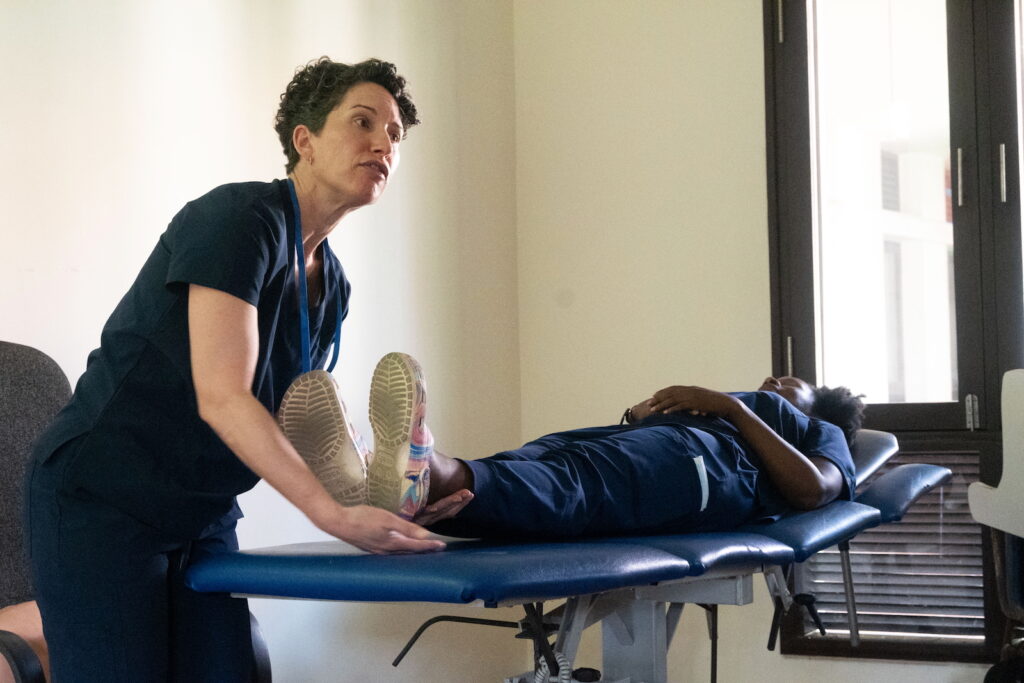
In Cambodia, much of the comforting physical contact — holding hands, wiping foreheads, or helping patients eat — was provided by families. Waite’s presentation encouraged nurses to consider how they can use touch as a way to connect with patients alongside the care provided by families.
Seeing families so actively involved with care gave new meaning to the palliative care techniques Waite had come to teach.
“We’re all going to have to know how to help take care of mom or dad or grandma and grandpa,” Waite said.
The knowledge exchange gives students a chance to see and compare how different healthcare systems operate, from how care is structured to family involvement at the bedside. While Orvis School students shared clinical practices such as palliative care techniques, they also noted differences in how responsibility and daily patient care is distributed. As Waite and other students observed, there can be benefits doing things in different ways, and in sharing lessons learned from different approaches.
“Just because things are different doesn’t mean they’re better or worse or anything like that,” Waite said. “Things can still be great and different.”
Kathleen Leslie is a recent graduate of the Reynolds School of Journalism. In March 2026, she travelled alongside students from the Orvis School of Nursing to Kampot, Cambodia to report on the global exchange program. This project was made possible with support from the Office of Global Engagement in the Orvis School of Nursing and the Hitchcock Project for Visualizing Science.