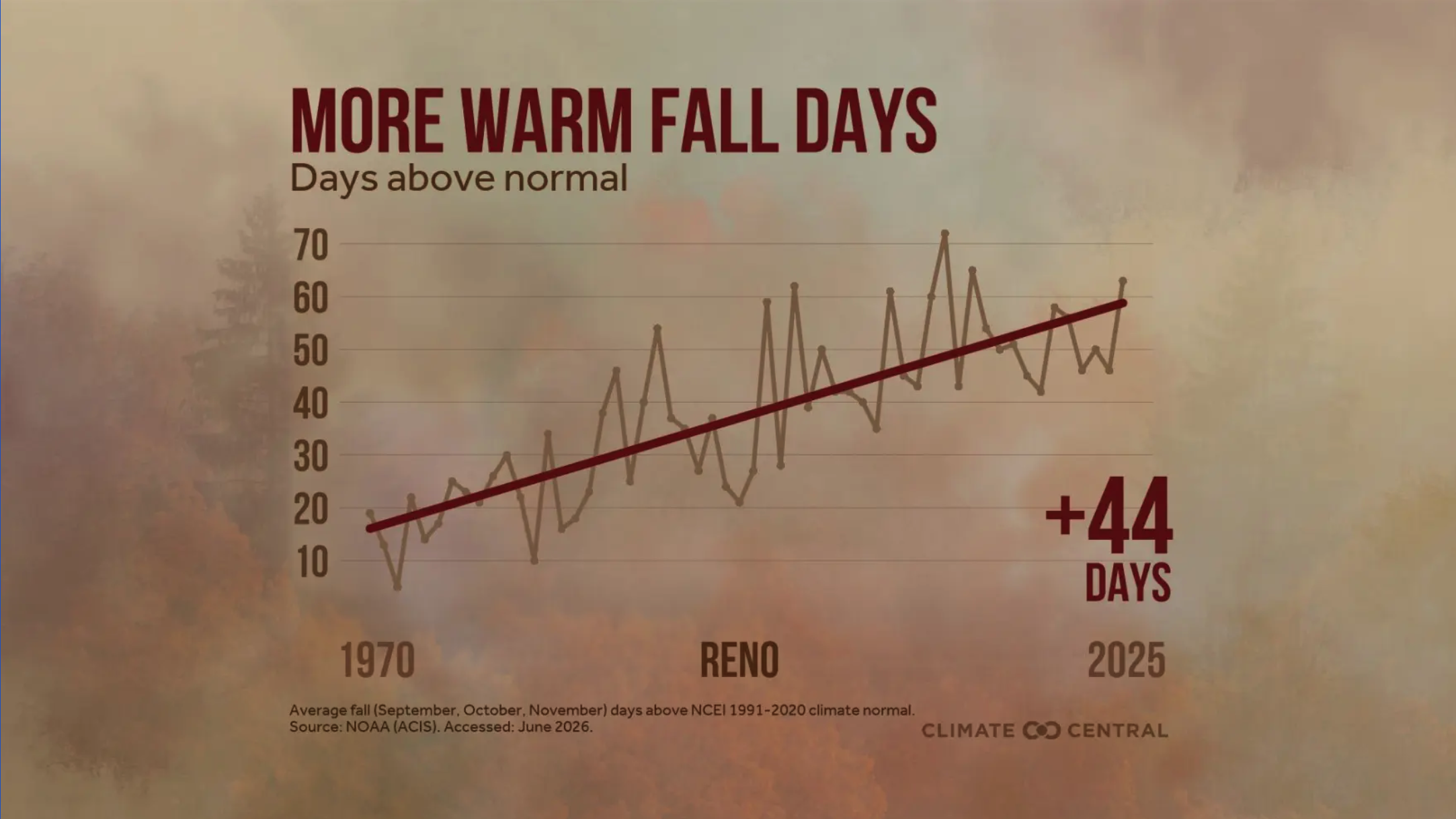
This story was shared with permission from KUNR Public Radio. For an audio version of the story, please visit the KUNR website. Above: Reno is warming faster than most U.S. cities with 44 above normal fall days since 1970. Credit: Climate Central.
It may be a longer wait before ‘sweater weather’ officially begins. A new analysis from Climate Central finds fall temperatures are rising across the country.
Researchers looked at data between 1970 and 2025. They found fall has warmed by almost 3 degrees Fahrenheit on average across the U.S.
Reno leads the top warming cities in the Southwest, with a nearly 8-degree increase. The city has seen more than double the number of warmer fall days compared to the rest of the country.
Climate Central researcher Mary Johnson said the long-term warming trend is largely driven by heat-trapping pollution from burning fossil fuels for heating and cooling, electricity, and transportation.
“A lot of cities have noticed changes, like perhaps milder winters, or you know warmer summers, or it being noticeably hotter when school starts in the fall,” she said.
Other factors contributing to warmer fall trends include El Niño patterns and the urban heat island effect. Rising temperatures could bring a higher demand for cooling and an increase in energy costs.
Johnson said warmer falls can be especially harmful for vulnerable groups like children, the elderly, and weather-exposed workers.
“It will increase the tipping point for people who are susceptible to heat-related illnesses,” she said.
Johnson added that raising awareness about the risks of heat-related illness is crucial as more cities experience warmer temperatures.
Lupe Alvarez is a graduate assistant for the Hitchcock Project for Visualizing Science in the Reynolds School of Journalism. She is the 2027 fall intern for KUNR and the Hitchcock Project for Visualizing Science