Reynolds School of Journalism | University of Nevada, Reno

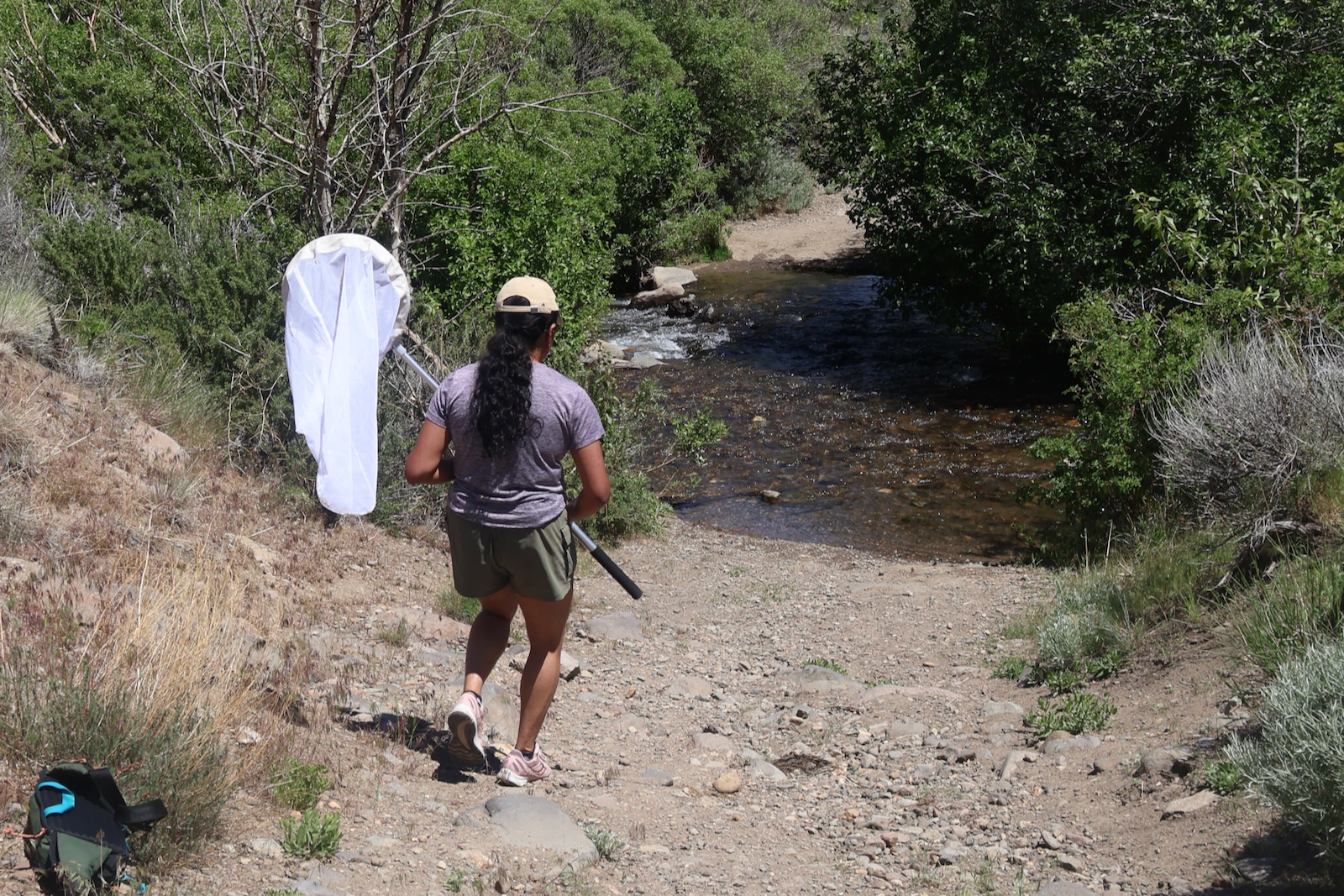
Victoria Peechatt carries butterfly net along Hunter Creek trail
Paige Newman

Photo essay: Chasing butterflies at Hunter Creek

By Zoie Alstead and Paige Newman

Most people hike Hunter Creek Trail for the 30-foot waterfall. Victoria Peechatt is there for something smaller and harder to catch.

Peechatt is a Ph.D. student at the University of Nevada, Reno, in the ecology, evolution, and conservation biology program. Her research centers on viruses that infect caterpillars and butterflies, pathogens that spread through insect populations. 

A few times a year, she makes the trek up part of Hunter Creek to catch butterflies and caterpillars along the trail. The creek corridor is home to dozens of species, including the Checkerspot butterfly, one of the primary focuses of her work. Each visit means navigating the trail in the heat of late spring, scanning constantly for the flicker of wings, hoping she hasn’t missed them.
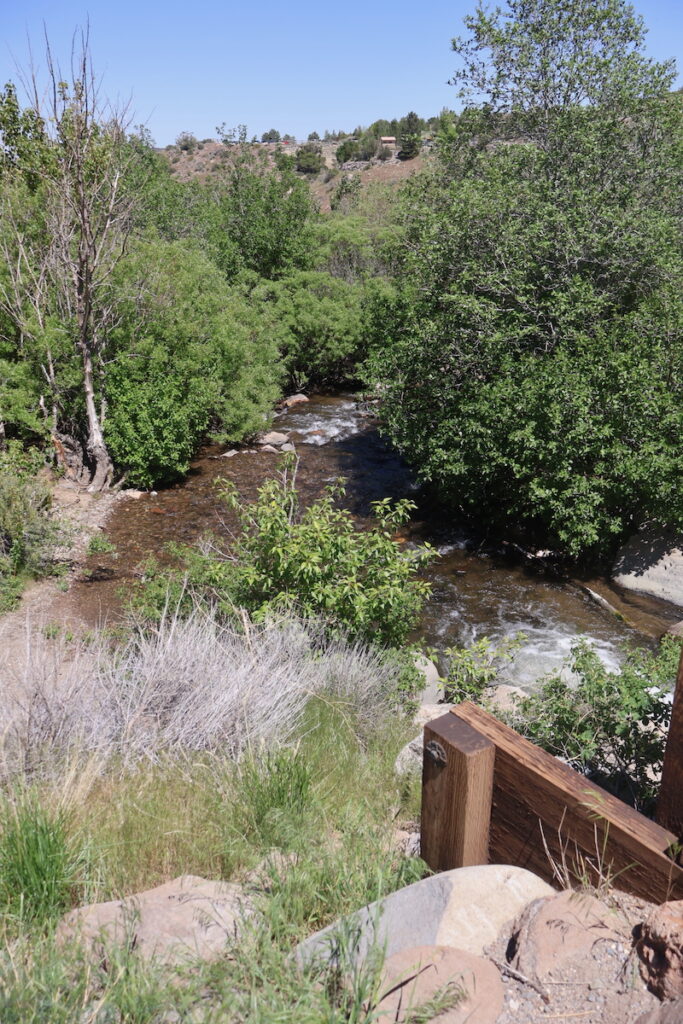
Hunter Creek Trail is a popular hiking spot in the Reno area
Hunter Creek Trail is a popular hiking spot in the Reno area, which spans 6 miles and includes a 30-foot waterfall. It is home to a variety of wildlife, including multiple species of butterflies. Credit: Paige Newman.
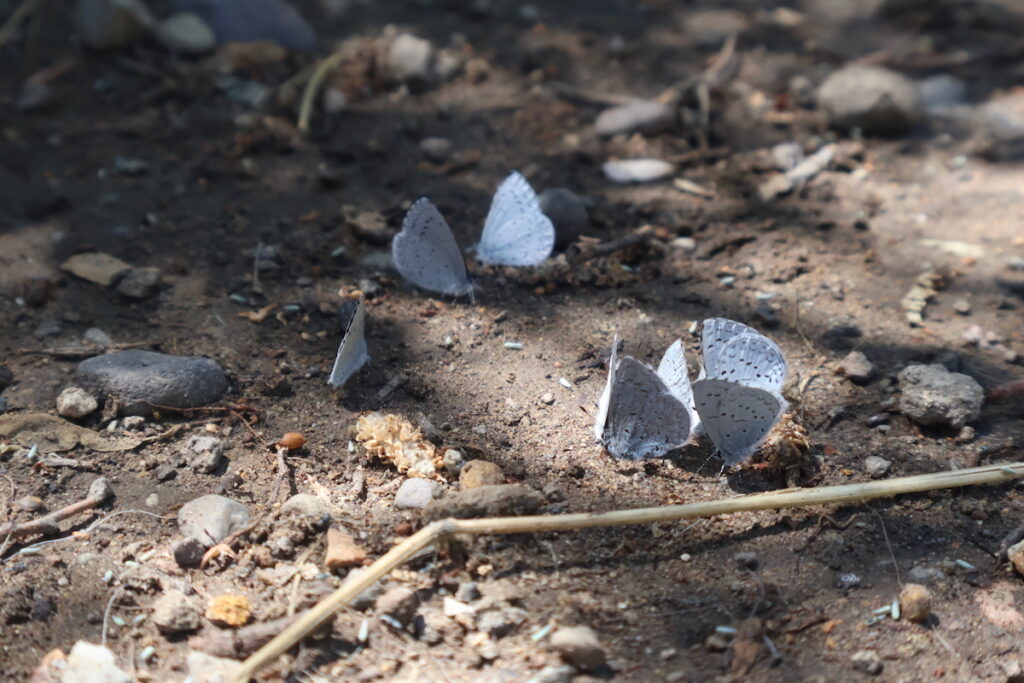
Sierra Nevada Blue butterflies, an abundant species in the area, gather to extract
electrolytes from the mud.
Near the creek, a small cluster of Sierra Nevada blue butterflies, an abundant species in the area, gather to extract electrolytes from the mud. This is a behavior called mud-puddling, in which butterflies absorb minerals and salts from damp ground. Credit: Paige Newman.
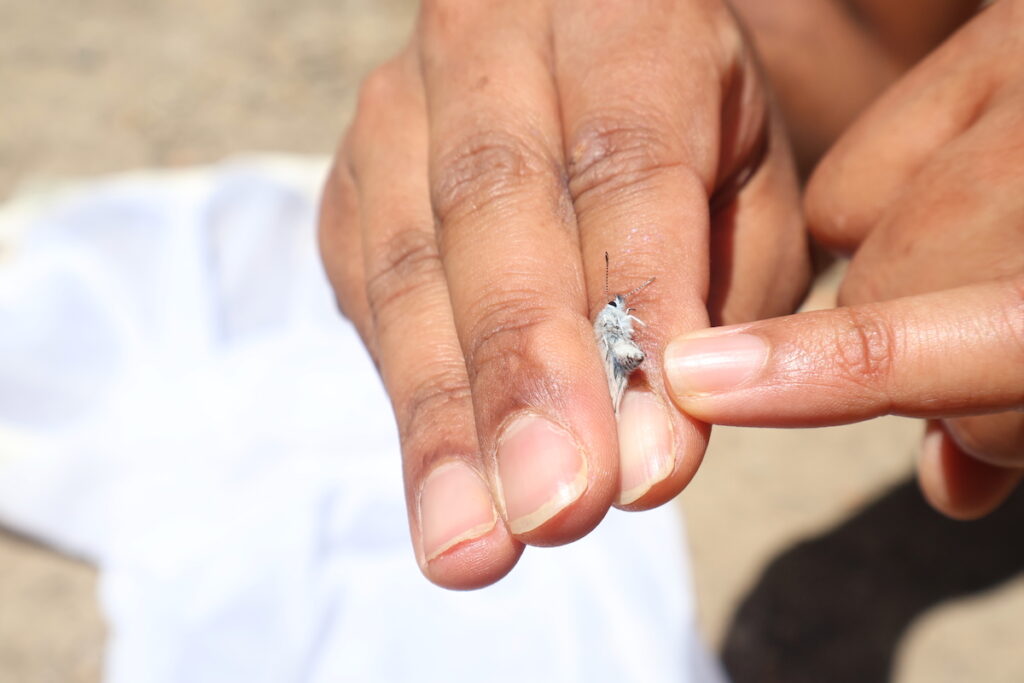
Peechatt gently holds a Sierra Nevada Blue by its wings between her pointer and middle finger.
The hole on the abdomen indicates it is a male.
Peechatt gently holds a Sierra Nevada Blue by its wings between her pointer and middle fingers.
The hole on the abdomen indicates it is a male. Credit: Paige Newman.
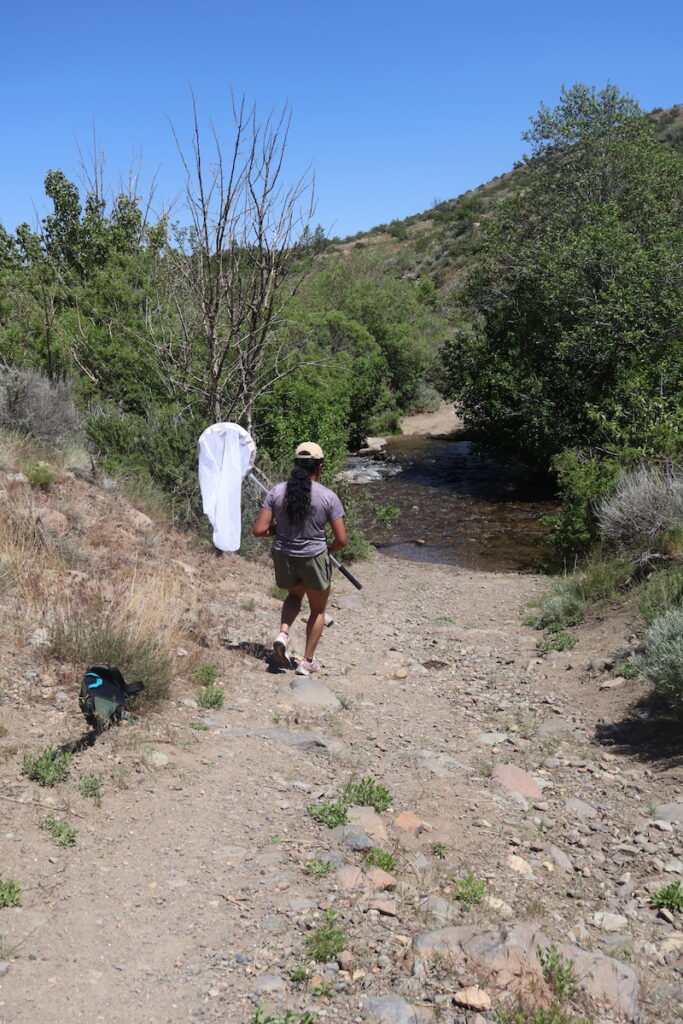
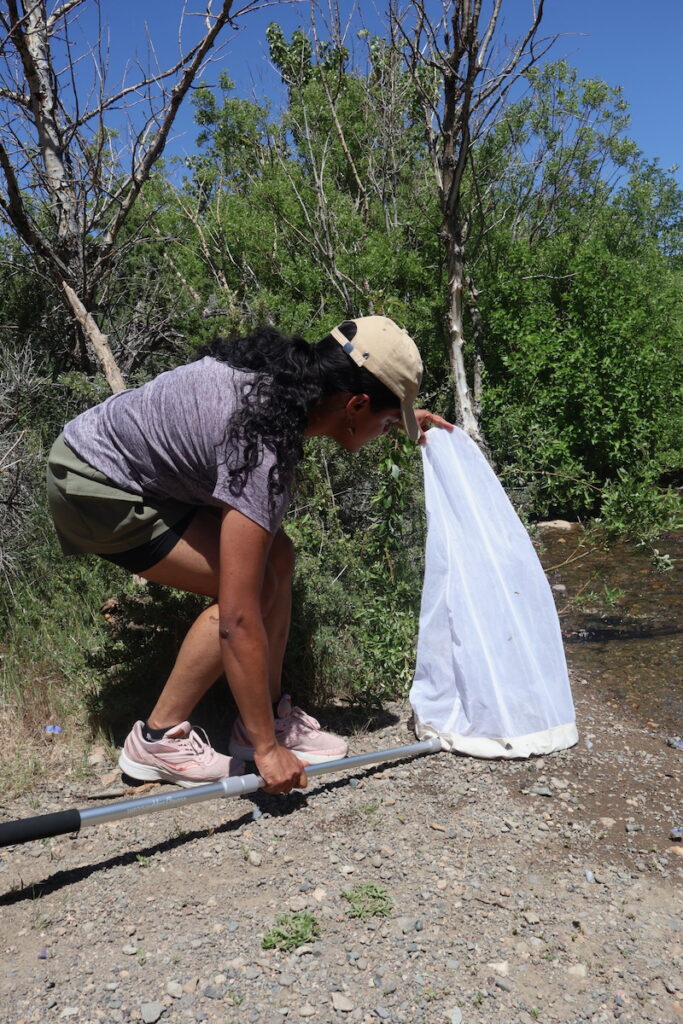
Peechatt chases after a butterfly with large net
Peechatt spots a Checkerspot butterfly lingering around the creek and chases after it in hopes of catching it for her study. Credit: Paige Newman.
Peechatt successfully captures the butterfly with her net. She ensures it flies towards the top so it
does not immediately fly out when she flips it over.
Peechatt successfully captures the butterfly with her net. She ensures it flies towards the top so it does not immediately fly out when she flips it over. Credit: Paige Newman.
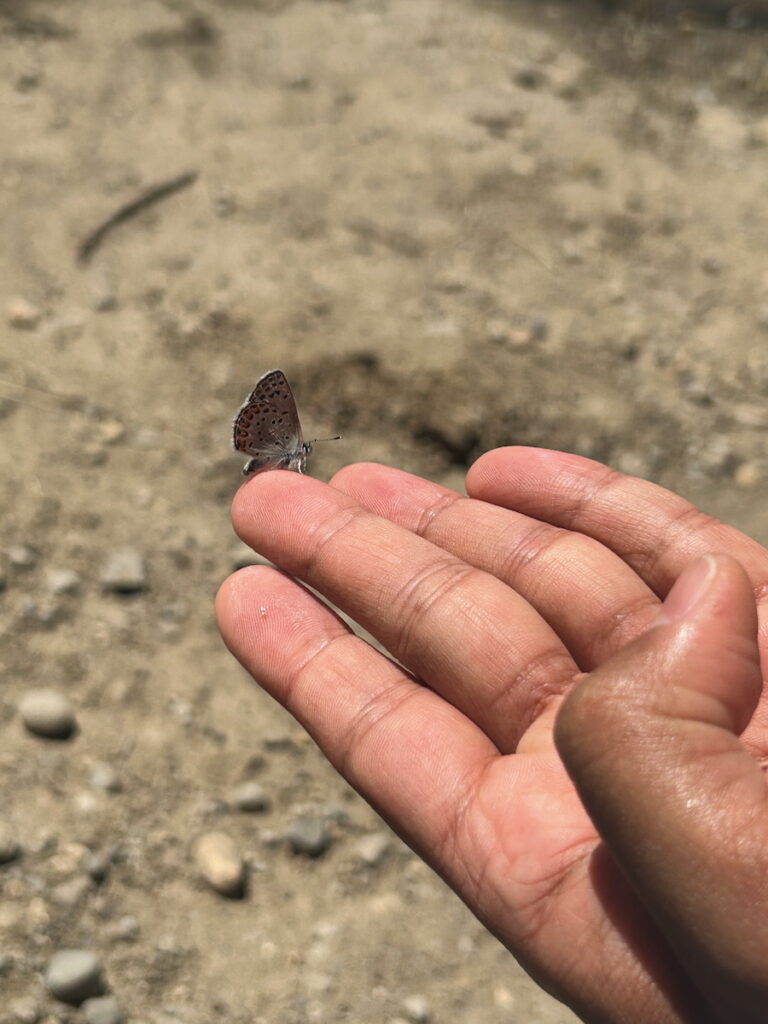
A blue butterfly rests in Peechatt's open hand after being caught and examined
A blue butterfly rests in Peechatt’s open hand after being caught and examined. Close handling lets researchers check wing condition and overall health before the insect is released back into the field. Photo credit: Zoie Alstad.
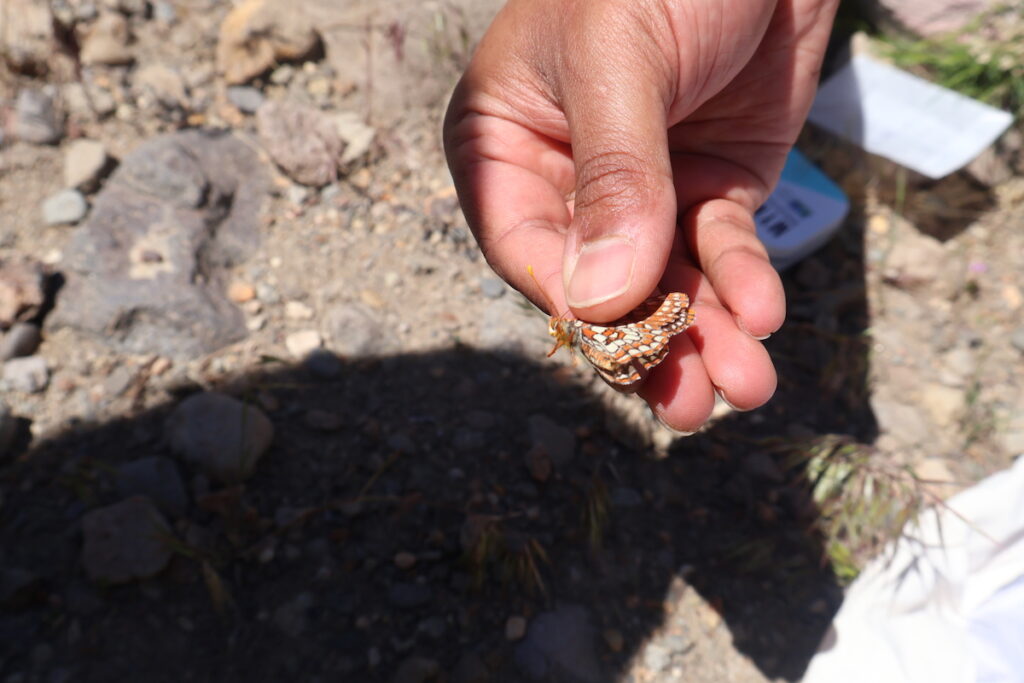
She carefully holds the Checkerspot between her thumb and pointer finger, identifying it as a
male. The butterfly has vibrant orange legs and antennae along with orange, white and black
patterned wings.
Peechatt carefully holds a Checkerspot between her thumb and pointer finger, identifying it as a male. The butterfly has vibrant orange legs and antennae along with orange, white and black patterned wings. Credit: Paige Newman
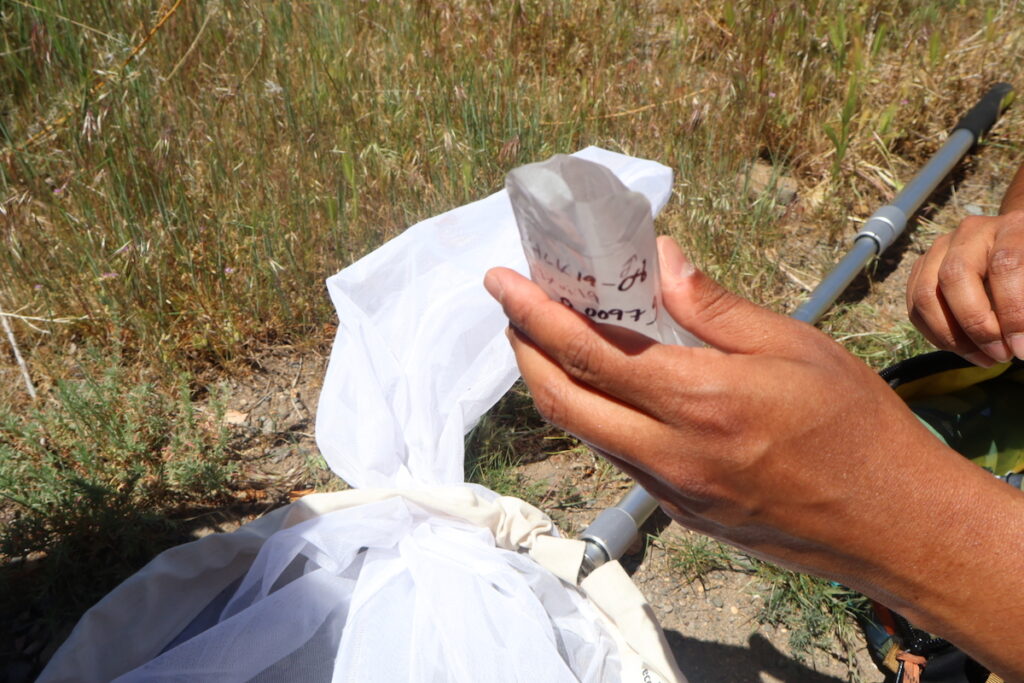
To keep the butterfly safe on the way back to the lab, she tucks them into small paper bags and
folds them.
To keep the butterflies safe on the way back to the lab, she tucks them into small paper bags and folds them. Credit: Paige Newman.
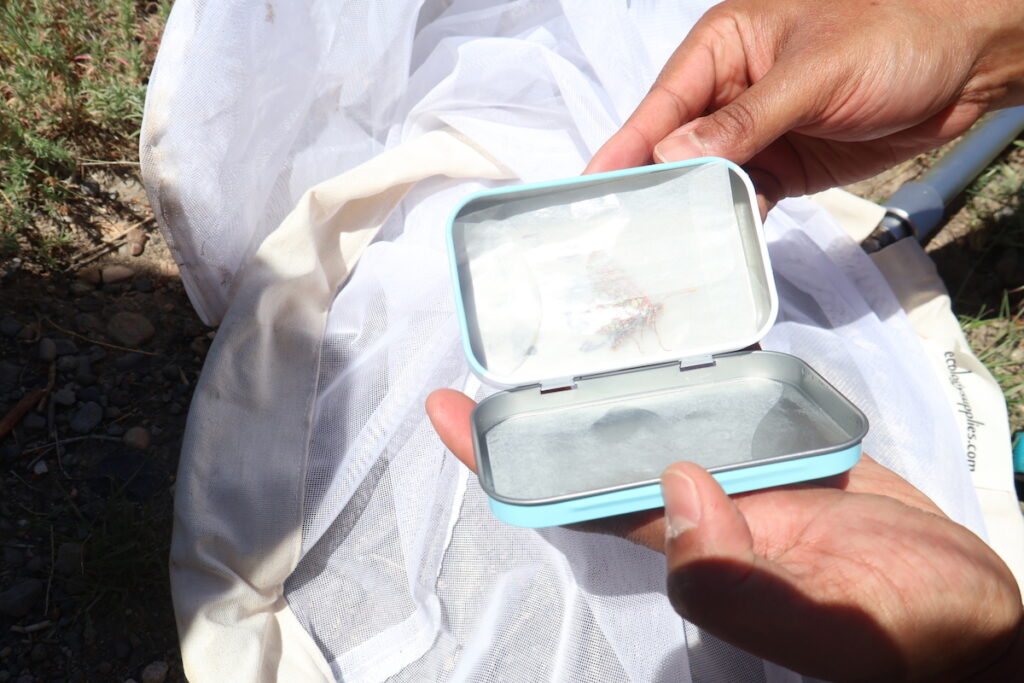
Once the butterfly is in the bag, Peechatt keeps them in an empty mint container in her bag along
with an icepack to keep them cool and calm
Once the butterfly is in the bag, Peechatt keeps them in an empty mint container in her bag along with an icepack to keep them cool and calm. Samples collected in the field will later be tested for viral pathogens. Credit: Paige Newman.
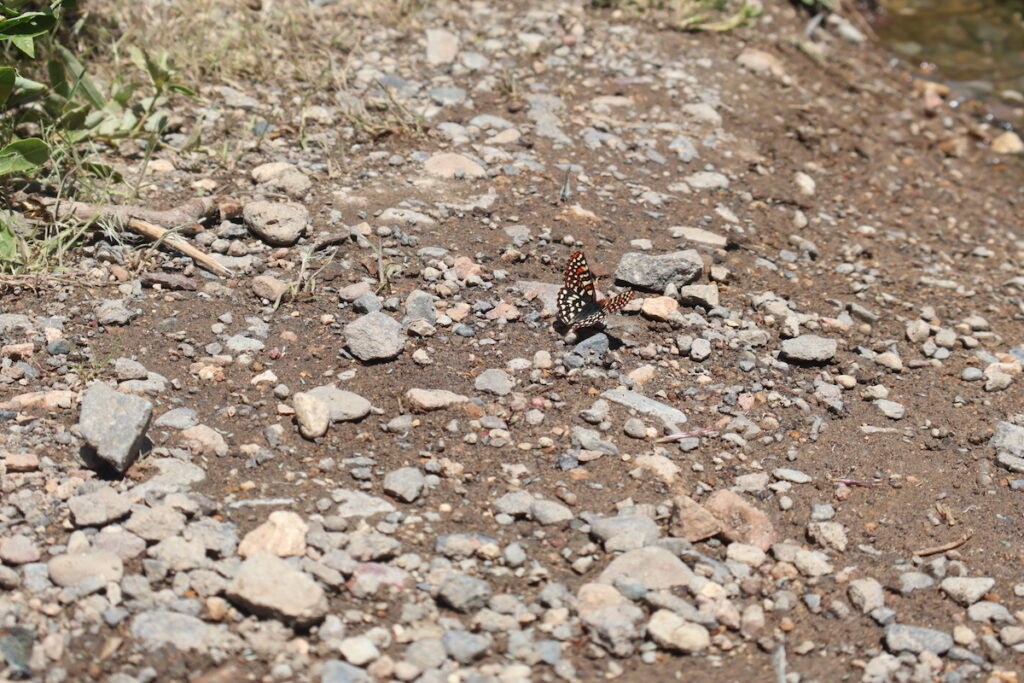
A male Checkerspot butterfly resting on a rock near the creek with its wings outstretched
A male Checkerspot butterfly rests on a rock near the creek with its wings outstretched. Credit: Paige
Newman.

Zoie Alstad and Paige Newman are students in the Reynolds School of Journalism. They created this photo essay as part of the Science and New Media class with the Hitchcock Project for Visualizing Science during spring 2026.
Share the Post: